
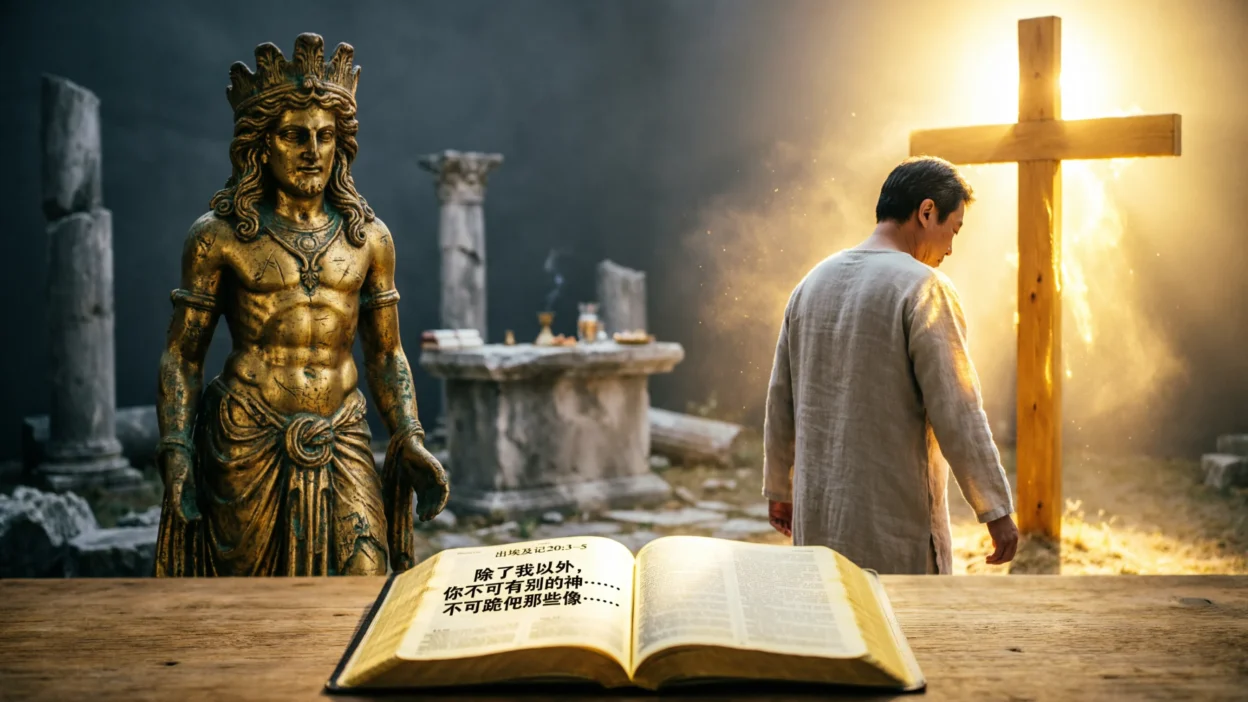
Have you ever become so focused on something that it seemed to take over your thoughts? It could be success, money, approval, possessions or even a personal goal. While many things in life are good, the Bible teaches that nothing should take the place that belongs to God.
This idea is closely connected to idolatry. When many people hear the word idolatry, they think of ancient statues or carved images. While that is part of the biblical meaning, Scripture reveals that idolatry can be much deeper. It is anything that becomes more important to us than God.
Many people searching for the idolatry meaning in the Bible want to understand what God says about idols, spiritual symbolism, and how this message applies to their daily lives. Some may have encountered symbols of idols in dreams or Bible study and wonder what spiritual lessons they carry.
The Bible speaks strongly about idolatry because God loves His people and desires a close relationship with them. He knows that when people place other things above Him, they often lose peace, purpose, and spiritual direction.
Yet the message of Scripture is not only a warning. It is also a message of hope. God continually invites His people back to Himself with grace, love, and forgiveness.
Let’s explore the biblical meaning of idolatry and discover the important spiritual lessons it teaches.
Biblical Meaning of Idolatry in the Bible
The idolatry meaning in the Bible refers to worshiping or valuing something above God. In ancient times, this often involved physical idols made of wood, stone, gold, or silver.
However, the Bible also teaches that idolatry can occur in the heart.
An idol is anything that takes God’s rightful place in a person’s life.
God’s Command Against Idolatry
One of the clearest teachings appears in Exodus 20:3-4, where God gives the Ten Commandments:
“You shall have no other gods before me.”
God also instructed His people not to create idols for worship.
These commands reveal God’s desire for wholehearted devotion. He alone is worthy of worship because He is the Creator, Savior, and Sustainer of life.
Idolatry in the Old Testament
Throughout the Old Testament, God’s people repeatedly struggled with idolatry.
One famous example is the golden calf in Exodus 32. While Moses was on Mount Sinai, the Israelites created a golden idol and worshiped it.
This event demonstrated how easily people can place their trust in something other than God.
The prophets continually warned Israel about turning to false gods and abandoning their relationship with the Lord.
Idolatry of the Heart
The New Testament expands the meaning of idolatry beyond physical statues.
Anything that becomes more important than God can become an idol.
Examples may include:
- Money
- Power
- Fame
- Success
- Relationships
- Possessions
- Self-centered desires
In Colossians 3:5, Paul even connects greed with idolatry because it places material desires above God.
Positive Spiritual Message
While idolatry itself carries a warning, the Bible also provides a positive message.
The opposite of idolatry is faithful devotion to God.
When believers place God first, they often experience:
- Peace
- Spiritual freedom
- Purpose
- Divine guidance
- Hope
- A deeper relationship with God
God’s call is not meant to restrict people. It is meant to protect them and lead them toward true fulfillment.
Warning Meaning of Idolatry
The Bible warns that idolatry can lead to:
- Spiritual distraction
- Broken priorities
- Distance from God
- Loss of peace
- Dependence on temporary things
Yet God’s response is often mercy and invitation.
Throughout Scripture, He repeatedly calls people to return to Him.
Bible Verses About Idolatry
Several key passages explain the Christian meaning of idolatry:
- Exodus 20:3-4 – No other gods before God.
- Deuteronomy 5:7 – Worship God alone.
- Psalm 115:4-8 – The emptiness of idols.
- Colossians 3:5 – Greed as idolatry.
- 1 John 5:21 – Keep yourselves from idols.
These verses reveal God’s desire for sincere worship and faithful devotion.
Spiritual Significance and Symbolism
The spiritual symbolism of idolatry centers on misplaced trust.
In the Bible, idols often symbolize anything that competes with God for the heart’s attention.
This symbolism remains relevant today.
Most people no longer bow before carved statues, yet modern idols can still exist.
A person may depend entirely on wealth for security. Another may seek approval from others more than God’s approval. Someone else may place personal ambition above their relationship with God.
The spiritual lesson is not about rejecting good things. Instead, it is about keeping God first.
Idolatry symbolism also points to spiritual awakening. Recognizing misplaced priorities can lead believers back to deeper faith and renewed commitment.
Imagine holding a compass that points in the wrong direction. No matter how hard you travel, you will not reach your destination.
God’s guidance helps believers realign their hearts so they remain focused on Him.
The Bible teaches that true peace comes not from possessions or achievements but from God’s presence.
When believers place Him first, they experience greater purpose and spiritual growth.
Biblical Interpretations in Dreams or Real Life
In dream interpretation, idols or acts of worship may symbolize misplaced priorities, distractions, or areas where attention has shifted away from God.
A dream involving the destruction of an idol may represent spiritual growth, freedom, or renewed commitment to faith.
A peaceful dream where someone turns away from an idol and toward light may symbolize repentance, healing, and a stronger relationship with God.
If the dream feels unsettling, it may encourage prayer and honest reflection about what currently holds the highest place in one’s heart.
In everyday life, idolatry can appear whenever something consistently receives more trust, devotion, or attention than God.
These experiences can serve as reminders to seek God’s guidance and realign priorities according to His Word.
Practical Lessons & Faith Insights
The Bible offers practical wisdom regarding idolatry:
- Put God first each day.
- Spend time in prayer and Scripture.
- Examine your priorities honestly.
- Trust God’s guidance above worldly pressures.
- Remember that true fulfillment comes from Him.
Keeping God at the center strengthens faith and brings lasting peace.
Conclusion
The idolatry meaning in the Bible goes far beyond ancient statues and false gods. Scripture teaches that idolatry occurs whenever something takes God’s rightful place in the heart.
While the Bible warns against misplaced trust, it also offers a hopeful message of grace, forgiveness, and restoration. God continually invites His people to return to Him and experience His peace, love, and guidance.
As you reflect on your own faith journey, may this message encourage you to place God first, trust His wisdom, and find lasting hope in His presence. When He remains at the center of your life, true spiritual freedom can flourish.

John Robert is a passionate author and faith-driven writer who contributes insightful and inspiring biblical content to Biblenast. With a strong commitment to sharing God’s Word, he focuses on creating meaningful messages that encourage spiritual growth, reflection, and daily guidance. His work aims to connect readers with the timeless teachings of the Bible.