
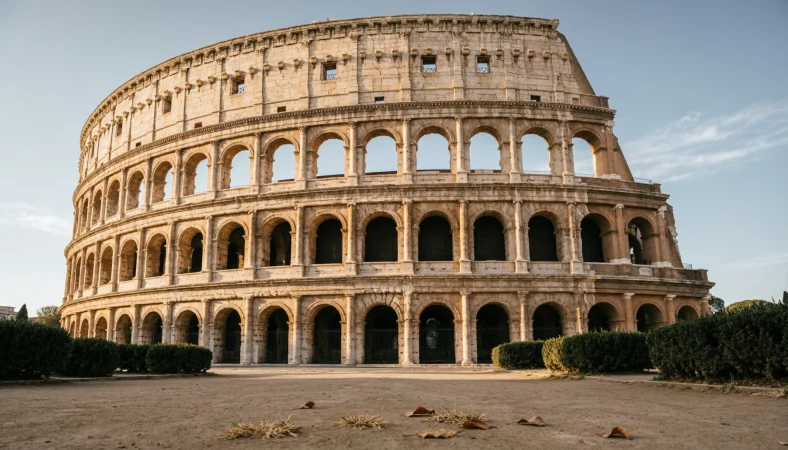
If you have ever wondered whether the correct spelling is coliseum or colosseum, you are not alone.
The two words look almost identical, sound similar, and are sometimes used interchangeably. However, they do not always refer to exactly the same thing.
Understanding the difference can help you choose the right word when writing about ancient Rome, large stadiums, or famous historical landmarks.
The key distinction is simple: Colosseum is the proper name of the famous ancient Roman amphitheater in Rome, Italy, while coliseum is a general noun that can describe a large stadium, arena, or place used for public entertainment.
The spelling you choose therefore depends on what you are talking about. In this guide, we will explain coliseum or colosseum, their origins, meanings, examples, common mistakes, and American and British English usage.
Quick Answer: Coliseum or Colosseum?
Colosseum is the correct spelling for the famous ancient Roman amphitheater in Rome.
Coliseum is a general term for a large arena or stadium and is also used in the names of some modern venues.
So, write “the Colosseum in Rome” when referring to the ancient landmark, but “a coliseum” when using the word as a general noun.
What Does Colosseum Mean?
Colosseum is the proper name of the ancient amphitheater located in the center of Rome, Italy. It was built during the Roman Empire and became one of the most recognizable symbols of ancient Roman civilization.
The structure was originally known as the Flavian Amphitheatre, because it was constructed under emperors from the Flavian dynasty.
Today, the Colosseum is one of Rome’s most famous tourist attractions and an important archaeological and historical site.
Because it is a specific place, Colosseum is normally capitalized.
Examples
- We visited the Colosseum during our trip to Rome.
- The ancient Colosseum could hold tens of thousands of spectators.
- The Colosseum in Rome is one of the world’s most famous ancient monuments.
What Does Coliseum Mean?
Coliseum is a common noun that generally refers to a large building or arena designed for public events, entertainment, sports, or gatherings.
It can also appear as part of the official name of a particular modern venue.
Unlike Colosseum, the general noun coliseum does not necessarily refer to Rome’s ancient amphitheater.
For example:
- The basketball team played at the local coliseum.
- Thousands of fans entered the coliseum for the concert.
- The city built a new coliseum for sporting events.
When used as a common noun, it is normally written with a lowercase c.
Coliseum vs. Colosseum: The Main Difference
The easiest way to remember the difference is to think about specific name versus general description.
| Word | Meaning | Typical Use | Capitalization |
|---|---|---|---|
| Colosseum | Ancient Roman amphitheater in Rome | Specific historical landmark | Capital C |
| coliseum | Large arena or stadium | General term or venue name | Usually lowercase |
| Coliseum | A proper name for a particular venue | Modern building or organization | Capital C |
The words are closely related, but they are not simply two interchangeable spellings in every context.
If you are writing about the famous Roman monument, Colosseum is the safest and most accurate choice.
The Origin and History of Colosseum
The word Colosseum is connected with the Latin name associated with the ancient Roman amphitheater. The structure itself was constructed during the first century CE.
Construction began under Emperor Vespasian around AD 70–72 and was completed under his son Titus around AD 80. Later, Emperor Domitian made additional changes to the complex.
The name Colosseum is believed to have become associated with a massive statue known as the Colossus of Nero, which once stood near the amphitheater.
| Historical Feature | Information |
|---|---|
| Original name | Flavian Amphitheatre |
| Location | Rome, Italy |
| Construction | Began in the first century CE |
| Dynasty | Flavian dynasty |
| Main purpose | Public entertainment |
| Famous events | Gladiatorial contests and spectacles |
| Modern significance | Major archaeological and tourist site |
Why Is It Called the Colosseum?
The name is connected to the enormous Colossus of Nero, a gigantic statue that stood in the vicinity of the amphitheater.
The exact development of the name over time is complex, but the association with the colossal statue is commonly cited as an important explanation.
This is an important detail for anyone studying Roman history because it shows that the name we use today developed over time.
Is Coliseum the Same as Colosseum?
In casual writing, people sometimes use coliseum when they mean the Roman Colosseum.
However, when referring specifically to the famous monument in Rome, Colosseum is the standard modern spelling.
The confusion exists partly because coliseum has developed into an English common noun meaning a large arena.
Consider these examples:
Correct for Rome:
We saw the Colosseum in Rome.
General use:
The new coliseum can accommodate thousands of spectators.
Using coliseum for the Roman landmark may be understood, but Colosseum is more precise and historically appropriate.
Coliseum or Colosseum in American English
American English uses both forms, but Colosseum is the standard spelling for the famous Roman landmark.
The word coliseum can also be found in the names of American sports arenas, convention centers, and other large public venues.
For example, a building may officially include Coliseum in its name even though it has no direct connection with ancient Rome.
This means American writers should pay attention to whether they are using the word as:
- The name of the Roman monument
- A general noun
- Part of a modern venue’s official name
Coliseum or Colosseum in British English
British English also distinguishes between the famous Colosseum in Rome and the general word coliseum.
The general term coliseum is less common in everyday British English than in some American contexts.
British speakers and writers may be more likely to use words such as arena, stadium, or amphitheatre, depending on the context.
Notice another British-American spelling difference here: British English generally spells the word amphitheatre, while American English commonly uses amphitheater.
Colosseum, Coliseum, Arena, and Amphitheater Compared
These terms are related but should not always be treated as synonyms.
| Term | Basic Meaning | Example |
|---|---|---|
| Colosseum | Famous ancient Roman amphitheater | The Colosseum is in Rome. |
| coliseum | Large public arena or stadium | The concert was held at the coliseum. |
| arena | Enclosed place for sports or entertainment | The hockey team played in the arena. |
| amphitheater | Large circular or oval venue with spectator seating | The ancient amphitheater hosted public events. |
| stadium | Large venue primarily associated with sports | The football match was held in the stadium. |
The best word depends on the building and the context.
Common Mistakes With Coliseum and Colosseum
Because the spellings are so similar, several mistakes are common.
Mistake 1: Writing “Coliseum” for the Roman landmark
We visited the Coliseum in Rome.
Although readers will understand what you mean, Colosseum is the standard spelling for the famous Roman structure.
Mistake 2: Capitalizing every use of “coliseum”
The city built a new Coliseum for concerts.
If the word is being used as a general noun rather than an official name, lowercase coliseum is appropriate.
Mistake 3: Assuming they are always interchangeable
The two words overlap in meaning, but context matters. Colosseum identifies a specific historical monument, whereas coliseum can describe a type of large venue.
Mistake 4: Confusing “Colosseum” with “Colossus”
The Colosseum was an amphitheater. The Colossus of Nero was a gigantic statue associated with the area.
They are related historically, but they are not the same thing.
How to Remember the Correct Spelling
A simple memory trick can make this distinction easier.
Think:
Colosseum = Rome
If you are talking about the ancient Roman landmark, use the spelling with -osseum.
Think:
coliseum = general arena
If you are describing a large venue rather than the famous Roman structure, coliseum may be appropriate.
You can also remember that Colosseum looks more distinctive because it is the proper name of a specific historical site.
Why Do People Search “Coliseum or Colosseum”?
People commonly search this phrase because the two words are almost identical in pronunciation and spelling.
The confusion is especially common when:
- Writing about ancient Rome
- Completing school assignments
- Writing travel content
- Describing historical architecture
- Editing articles about Roman history
- Choosing the spelling for a place name
- Learning English vocabulary
For students and writers, knowing the difference is useful because a small spelling change can affect precision.
Examples of Coliseum and Colosseum in Sentences
Here are practical examples showing the difference clearly.
Colosseum
- The Colosseum is located in Rome.
- Millions of tourists visit the Colosseum each year.
- The ancient Colosseum is an important symbol of Roman history.
- We learned about the Colosseum in history class.
Coliseum
- The basketball game was held at the local coliseum.
- The new coliseum has seating for thousands of people.
- A large crowd gathered outside the coliseum before the concert.
- The city plans to renovate its old coliseum.
These examples show why context matters more than pronunciation alone.
A Simple Comparison Table
| Question | Answer |
|---|---|
| Which spelling refers to the Roman landmark? | Colosseum |
| Is Colosseum a proper noun? | Yes |
| Should Colosseum be capitalized? | Yes, when referring to the Roman monument |
| Can coliseum be a common noun? | Yes |
| Does coliseum mean a large arena? | Yes |
| Are the words always interchangeable? | No |
| Which spelling should you use for Rome? | Colosseum |
Final Thought
Choosing between coliseum or colosseum becomes easy once you understand the difference between a specific historical name and a general noun.
For essays, travel articles, history assignments, and professional writing, use Colosseum when discussing the Roman landmark.
If you are talking about a large public arena in general, coliseum may be the appropriate word.
When in doubt, look at the context: Rome means Colosseum; a general arena may be a coliseum.
FAQs About Coliseum or Colosseum
1. Is it Coliseum or Colosseum?
Colosseum is the standard spelling for the famous ancient Roman amphitheater in Rome. Coliseum is a general noun for a large arena or may occur in modern venue names.
2. Why are Coliseum and Colosseum spelled differently?
They have related historical origins, but Colosseum became the established proper name for the Roman monument, while coliseum developed as a general English term for a large arena.
3. Should I capitalize Colosseum?
Yes. Capitalize Colosseum when referring to the famous Roman landmark because it is a proper name.
4. Is the Roman Coliseum wrong?
Using Roman Coliseum is understandable, but Roman Colosseum is the preferred and standard spelling when referring to the ancient amphitheater in Rome.
5. What is the difference between a coliseum and an arena?
A coliseum can describe a large public venue, while arena is a broader and more commonly used term for a place designed for sports, entertainment, or performances.
6. Is Colosseum British or American English?
Colosseum is used in both British and American English for the ancient Roman landmark. The general word coliseum is also recognized, although its frequency and usage can vary by context.
7. What is the easiest way to remember Colosseum?
Remember “Colosseum = Rome.” If you mean the ancient Roman monument, use Colosseum with a capital C.
Summary: Coliseum or Colosseum?
The difference between coliseum or colosseum is mainly one of specific versus general usage.
Colosseum is the proper name of Rome’s famous ancient amphitheater, while coliseum can be used as a common noun for a large arena or as part of the official name of a modern venue.
For most historical and travel writing about ancient Rome, Colosseum is the correct choice.
Learning this distinction will help you avoid a common spelling mistake and make your writing more precise.
Actionable Takeaway
When proofreading your writing, ask one question: “Am I talking about the famous Roman monument?”
If the answer is yes, write Colosseum. If you are referring to a general large arena, coliseum may be correct.
Always check an official venue’s name when capitalization or spelling is part of its title.

Patricia Mary is a devoted writer and contributor at Biblenast, passionate about sharing the message of faith through meaningful biblical content. She focuses on creating inspiring and thoughtful writings that encourage spiritual growth, reflection, and a deeper connection with God’s Word in everyday life.