
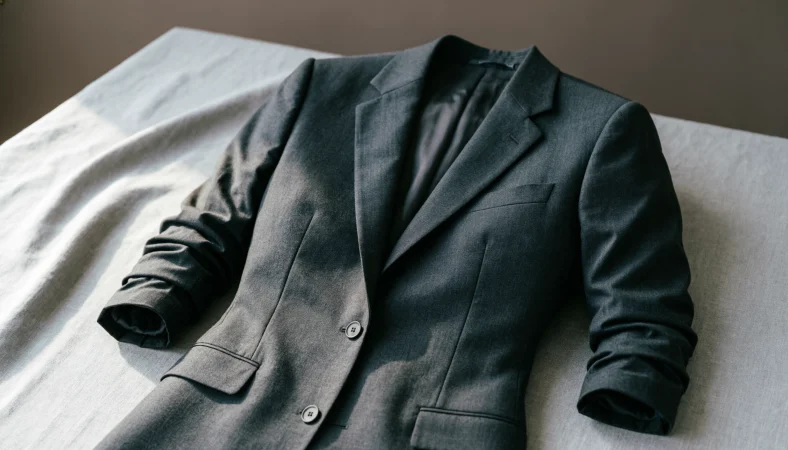
Choosing between fit or fitted can be confusing because both words are correct, but they are not always used in the same situations.
The difference becomes especially noticeable when talking about clothing, size, physical suitability, or something being installed into a place. Understanding when to use each form can make your English sound more natural and precise.
The word fit can function as a verb, adjective, or noun, while fitted is commonly used as the past tense or past participle of the verb “fit.”
In some contexts, especially British English, “fitted” is also used as an adjective to describe something designed to fit closely.
if you should say fit or fitted depends on the grammatical structure, meaning, and variety of English you are using.
Quick Answer: Fit or Fitted?
Fit is usually the base form and present-tense form of the verb, while fitted is commonly the past tense and past participle.
- Present: “These shoes fit me well.”
- Past: “These shoes fitted me well.”
- Adjective: “She wore a fitted jacket.”
- After “did”: “Did the shoes fit you?”
However, there are important differences between American and British English, particularly when “fit” refers to installing or attaching something.
What Does “Fit” Mean?
Fit has several meanings in English. As a verb, it can mean that something is the correct size or shape for another thing.
For example:
- “This shirt fits me perfectly.”
- “The key fits the lock.”
- “Will this table fit in the room?”
“Fit” can also mean to put or place something into a particular position.
For example:
- “The technician will fit a new shower.”
- “They need to fit a new window.”
As an adjective, fit can mean suitable, appropriate, or physically healthy.
Examples include:
- “This candidate is fit for the position.”
- “He is physically fit.”
- “The room is fit for purpose.”
Because “fit” has several grammatical roles, it is important to examine the sentence rather than assuming that “fitted” is always the past form.
What Does “Fitted” Mean?
Fitted is commonly the past tense and past participle of fit when the verb means to install, attach, or equip something.
Examples:
- “They fitted a new door yesterday.”
- “The workers fitted the kitchen last week.”
- “The mechanic fitted new tires to the car.”
“Fitted” can also be an adjective. In this use, it often describes clothing or furniture designed to fit closely or accurately.
Examples:
- “She bought a fitted dress.”
- “The bedroom has fitted wardrobes.”
- “He prefers a fitted shirt.”
Therefore, “fitted” is not simply a word that replaces “fit.” Its correct use depends on the meaning and grammatical structure.
Fit or Fitted as Verb Forms
One of the easiest ways to understand fit or fitted is to look at their verb forms.
In many varieties of English, especially American English, “fit” can be used as both the present and past form when describing size or suitability.
| Tense | Example |
|---|---|
| Present | “The shoes fit me.” |
| Past | “The shoes fit me yesterday.” |
| Past participle | “The shoes have fit me well.” |
However, “fitted” is also used, particularly when the meaning involves installing or attaching something.
| Meaning | Example |
|---|---|
| Correct size | “The jacket fit me.” |
| Install | “The workers fitted a new sink.” |
| Equip | “The car was fitted with new brakes.” |
| Close-fitting design | “She wore a fitted coat.” |
This distinction is particularly useful for learners of English.
When Should You Use “Fit”?
Use fit when talking about something being the right size, shape, or suitability, especially in the present tense.
Examples:
- “These trousers fit perfectly.”
- “Does this box fit under the bed?”
- “The new shoes fit better.”
- “This position fits his experience.”
- “The pieces fit together.”
You should also use fit after auxiliary verbs such as “do,” “does,” and “did.”
For example:
- “Did the dress fit you?”
- “Does this cover fit the phone?”
- “Will this shelf fit here?”
A common mistake is to say “Did it fitted?” This is incorrect because the auxiliary verb “did” already marks the past tense.
Correct:
“Did it fit?”
Incorrect:
“Did it fitted?”
When Should You Use “Fitted”?
Use fitted when describing an action that was completed, particularly when something was installed, attached, or equipped.
For example:
- “A new engine was fitted to the vehicle.”
- “The electrician fitted new lights.”
- “They fitted a security system last month.”
“Fitted” is also common as an adjective.
Examples:
- fitted kitchen
- fitted wardrobe
- fitted sheet
- fitted jacket
- fitted dress
In these expressions, “fitted” describes something specifically designed or arranged to fit a particular space or shape.
Fit or Fitted in American English
American English generally uses fit as both the present and simple past form when referring to size or physical compatibility.
For example:
- “The shirt fits me.”
- “The shirt fit me last year.”
- “The shoes fit perfectly.”
However, American English also uses fitted when the meaning is to install or equip something.
For example:
- “The mechanic fitted the car with new equipment.”
In everyday American usage, another construction such as “installed,” “put in,” or “equipped” may sometimes sound more natural depending on the context.
The important point is that American speakers commonly use fit → fit for the past tense when discussing size.
Fit or Fitted in British English
British English makes a more noticeable distinction between fit and fitted.
When referring to size, British English commonly uses:
- “The shoes fit me.”
- “The shoes fitted me perfectly.”
When referring to installation, British English frequently uses fitted:
- “They fitted a new boiler.”
- “We had a new kitchen fitted.”
British English also frequently uses “fitted” as an adjective:
- “a fitted kitchen”
- “fitted wardrobes”
- “fitted furniture”
This means that both varieties of English use the two forms, but their preferences can differ.
Fit or Fitted: Comparison Table
| Feature | Fit | Fitted |
|---|---|---|
| Present verb | Yes | No |
| Past verb | Yes, commonly in American English | Yes, especially in British English |
| Installation | Sometimes | Very common |
| Close-fitting adjective | No | Yes |
| Correct size | Very common | Possible, depending on dialect |
| After “did” | Yes | No |
The most important rule is that “did” must be followed by “fit,” not “fitted.”
Common Examples of Fit and Fitted
Here are some practical examples to make the difference easier to remember.
Correct use of “fit”
- “Does this shirt fit?”
- “The shoes fit me well.”
- “Will this sofa fit through the door?”
- “Did the dress fit you?”
- “These parts fit together.”
Correct use of “fitted”
- “They fitted a new bathroom.”
- “The mechanic fitted new tires.”
- “She bought a fitted blouse.”
- “The house has fitted wardrobes.”
- “The vehicle was fitted with safety equipment.”
These examples show that the two forms have overlapping meanings but cannot always be substituted for each other.
Common Mistakes With Fit and Fitted
English learners often make a few predictable mistakes with these words.
Mistake 1: “Did it fitted?”
This is incorrect.
Correct:
“Did it fit?”
The auxiliary “did” takes the base form of the verb.
Mistake 2: “It fitted me yesterday” in every context
This sentence is acceptable in British English when discussing clothing or size, but American English commonly prefers:
“It fit me yesterday.”
Therefore, dialect matters.
Mistake 3: “I fit a new kitchen”
This can sound unusual to American English speakers when the intended meaning is “install.”
In British English, however, “I fit a new kitchen” can be natural because “fit” is used to mean install.
The past form would be:
“I fitted a new kitchen.”
Fit vs. Fitted: Meaning and Usage
| Expression | Meaning | Example |
|---|---|---|
| fit | Be the correct size | “These jeans fit me.” |
| fit | Be suitable | “He fits the role.” |
| fit | Be able to go into a space | “The box fits here.” |
| fitted | Installed | “They fitted a new sink.” |
| fitted | Equipped | “The car was fitted with sensors.” |
| fitted | Close-fitting | “She wore a fitted jacket.” |
This table provides a useful shortcut: think about whether fit describes compatibility or whether fitted describes an installed or specially designed object.
Why Do People Search “Fit or Fitted”?
People often search fit or fitted because English has unusual verb patterns. The confusion becomes stronger when learners encounter different forms in American and British English.
Someone might read:
“The shoes fit me yesterday.”
and later see:
“The shoes fitted me perfectly.”
Both can be acceptable depending on the variety of English and context.
The question also comes up frequently in clothing descriptions, home improvement, construction, automotive writing, and everyday conversation.
Understanding the difference helps writers avoid unnecessary grammatical mistakes and makes their English more natural.
How to Remember the Difference
A simple memory trick can make these words easier.
Think of fit as the idea of being the right size or matching:
“It fits.”
Think of fitted as something being installed, equipped, or designed to fit closely:
“It was fitted.”
For questions with “did,” always remember:
Did + fit
Never:
Did + fitted
For example:
- “Did the shoes fit?”
- “Did the new window fit?”
This simple rule eliminates one of the most common errors.
Final Summary: Fit or Fitted?
The choice between fit or fitted depends on both meaning and English variety.
Fit is the standard present form and is also commonly used as the past tense in American English when describing size or suitability.
In British English, fitted may be used as the past tense in some of these contexts.
When in doubt, look at the sentence structure. After “did,” use fit. When describing something installed or designed to fit closely, fitted is usually the better choice.
Final Thought
Learning the difference between fit or fitted becomes much easier once you focus on meaning instead of memorizing isolated rules.
Fit” commonly describes size, suitability, or compatibility, while “fitted” often describes something that has been installed, equipped, or made to fit closely.
British and American English can differ when “fit” is used in the past tense, so encountering both forms does not necessarily mean one is wrong.
The most important rule to remember is simple: after “did,” use the base form fit, not “fitted.” With a little attention to context, these two forms become straightforward, and you can use them confidently in everyday speech and professional writing.
FAQs About Fit or Fitted
1. Is it “fit” or “fitted”?
Both are correct, but they are used differently. “Fit” commonly describes size or compatibility, while “fitted” often refers to installation or close-fitting design.
2. Is “fitted” the past tense of “fit”?
Yes, fitted can be the past tense and past participle of “fit,” especially when “fit” means install or equip. British English may also use “fitted” for past situations involving size.
3. Is “Did it fit?” or “Did it fitted?” correct?
“Did it fit?” is correct. After “did,” English uses the base form of the verb.
4. Do Americans say “fit” or “fitted” for the past?
American English commonly uses fit as the past tense when discussing size or compatibility: “The shoes fit me yesterday.”
5. Do British people use “fitted” more often?
Yes. British English commonly uses fitted when something has been installed and can also use it as a past form when discussing whether something was the correct size.
6. Is “fitted” an adjective?
Yes. Examples include “a fitted shirt,” “fitted wardrobes,” and “a fitted kitchen.”
7. Which should I use in formal writing?
Use the form that matches your intended meaning and variety of English. For installation, “fitted” is often appropriate; for size, “fit” is frequently the natural choice.

David William is a dedicated writer and spiritual enthusiast with a deep passion for sharing biblical wisdom. As the author behind Biblenast, he focuses on delivering meaningful scripture-based content that inspires faith, reflection, and daily guidance. His mission is to make the teachings of the Bible accessible, uplifting, and relevant to modern life.