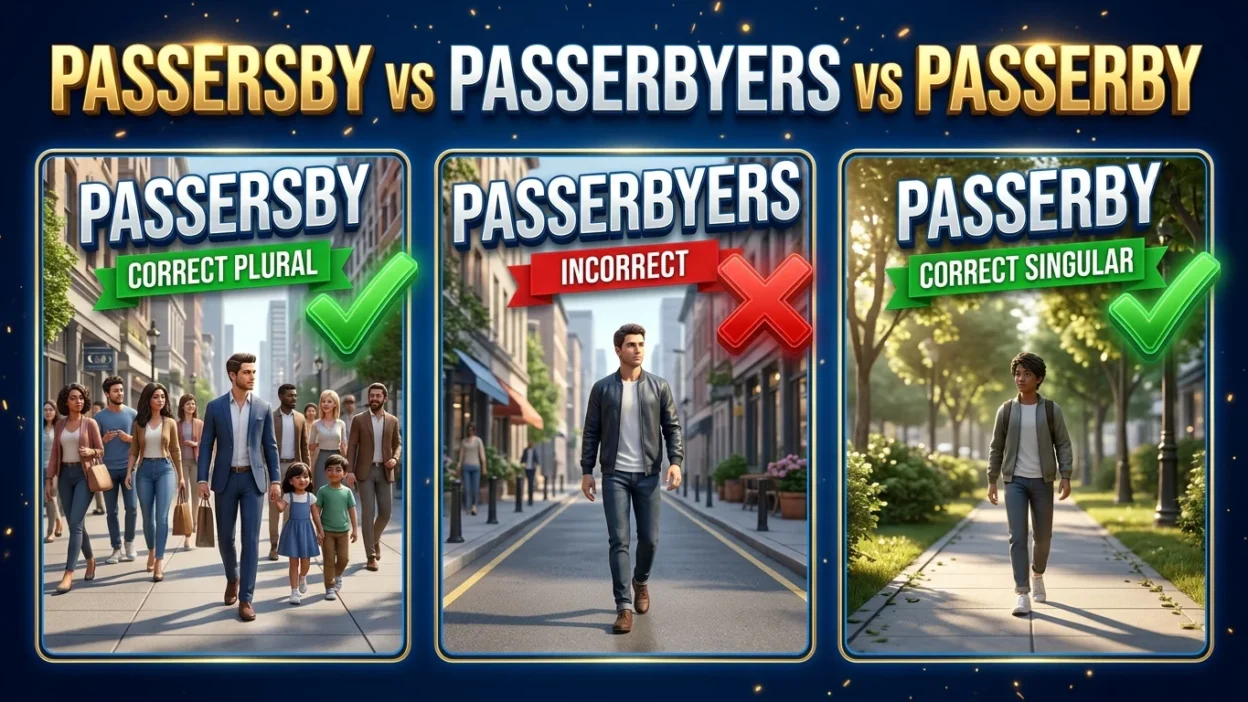
The words passersby, passerby, and passerbyers are often confused because they look and sound similar. However, only two are correct English forms: passerby and passersby.
The word passerby refers to one person who walks past a particular place, while passersby refers to two or more people who walk past. Passerbyers is an incorrect spelling and should not be used in standard English.
Understanding the difference is important for students, writers, English learners, and anyone who wants to improve their grammar and spelling. Unlike many English nouns that form plurals by adding -s or -es at the end, passerby follows a special plural pattern.
In this guide, you will learn the correct spelling, meanings, grammatical differences, and practical examples of each form. You will also discover simple memory tricks to help you use these words confidently in everyday writing and conversation.
Quick Answer
Passerby is the correct singular form for one person walking past, and passersby is the correct plural form for multiple people. Passerbyers is incorrect because the plural of passerby is formed by changing passer to passers, not by adding -ers to the entire word.
Why Do People Confuse Passersby, Passerbyers, and Passerby?
People often confuse these words because English has unusual plural rules for certain compound nouns.
Most English nouns become plural by adding -s or -es. For example:
- Book → Books
- Teacher → Teachers
- Bus → Buses
However, passerby is different. It is a compound noun made from two parts: passer and by. Its plural form changes the first part rather than the second.
This unusual structure makes people mistakenly write passerbyers, even though it is not grammatically correct.
First Word: Passersby
Passersby is the correct plural form of passerby. It describes two or more people who walk past someone or something without necessarily stopping.
It is commonly used when talking about people walking along streets, visiting public places, or passing by an event.
Examples:
- Several passersby stopped to watch the street performance.
- The accident attracted the attention of many passersby.
- Passersby noticed the beautiful decorations outside the shop.
- A few passersby helped the injured man.
Remember that passersby refers to more than one person.
Second Word: Passerby
Passerby is the correct singular form. It refers to one person who happens to walk past a particular location.
The word is commonly used in everyday English, news reports, stories, and descriptions of public situations.
Examples:
- A passerby helped the old woman cross the road.
- One passerby noticed the missing wallet.
- A passerby stopped to ask for directions.
- The passerby called the police after seeing the accident.
Use passerby whenever you are talking about just one person.
Third Word: Passerbyers
Passerbyers is an incorrect spelling in standard English. It is not the accepted plural form of passerby.
People sometimes create this word by adding -ers to passerby, assuming that it follows the regular plural pattern. However, this is not how the compound noun works.
Incorrect: Several passerbyers watched the parade.
Correct: Several passersby watched the parade.
For standard writing, always use passersby instead of passerbyers.
Passersby vs Passerby vs Passerbyers: Comparison Table
| Word | Correct or Incorrect? | Meaning |
| Passerby | Correct | One person walking past |
| Passersby | Correct | Two or more people walking past |
| Passerbyers | Incorrect | Not a standard English word |
When Should You Use Each Word?
Choosing the right word depends on the number of people you are describing.
Use Passerby for One Person
Use passerby when referring to a single person walking past a place.
Example: A passerby offered to help the lost child.
Use Passersby for Multiple People
Use passersby when referring to two or more people walking past.
Example: Many passersby gathered around the street musician.
Avoid Passerbyers
Do not use passerbyers in standard English writing.
Incorrect: The passerbyers enjoyed the outdoor concert.
Correct: The passersby enjoyed the outdoor concert.
12 Examples of Passerby and Passersby in Sentences
Here are practical examples to help you understand the difference.
- A passerby found a wallet on the sidewalk.
- Several passersby stopped to watch the show.
- The passerby quickly called for help.
- Many passersby walked through the busy market.
- A friendly passerby gave me directions.
- The passersby noticed smoke coming from the building.
- One passerby helped the injured cyclist.
- A group of passersby gathered near the entrance.
- The passerby smiled and continued walking.
- Several passersby took pictures of the beautiful sunset.
- A passerby noticed the lost dog.
- The passersby were surprised by the sudden rain.
Common Mistakes to Avoid
English learners and even experienced writers sometimes make mistakes when using these words.
Here are some common errors:
| Incorrect Usage | Correct Usage |
| One passersby | One passerby |
| Many passerby | Many passersby |
| Passerbyers | Passersby |
| Two passerby | Two passersby |
| A passerbys helped me | A passerby helped me |
Important tip: Always check whether you are describing one person or multiple people before choosing the word.
Easy Memory Trick
Remember this simple rule:
- Passerby = One person.
- Passersby = More than one person.
- Passerbyers = Incorrect spelling.
Think of the word as two parts: passer + by.
When you need the plural, add the plural ending to passer, giving you passers + by.
This makes it easier to remember that the correct plural is passersby, not passerbyers.
American vs British English
There is no major spelling difference between American and British English when using passerby and passersby.
Both varieties use:
- Passerby for one person.
- Passersby for multiple people.
The spelling passerbyers is not the standard plural form in either variety.
American English example: A passerby called the emergency services.
British English example: Several passersby stopped to help the cyclist.
Both sentences use the correct spelling and grammatical structure.
Similar Words to Passerby
Several English words describe people who walk, travel, or move past a location.
| Word | Meaning |
| Pedestrian | A person walking, especially along a road |
| Bystander | Someone who witnesses an event without participating |
| Onlooker | Someone who watches an activity or event |
| Spectator | Someone watching a performance or event |
| Walker | A person who walks |
| Stranger | Someone you do not know |
| Traveler | Someone who travels from one place to another |
| Passerby | Someone who happens to walk past |
These words are related, but they are not always interchangeable. For example, a bystander watches an event, while a passerby is simply someone passing a particular location.
Final Verdict: Passersby vs Passerbyers vs Passerby
The correct singular form is passerby, and its correct plural form is passersby. The spelling passerbyers is incorrect in standard English.
If you are talking about one person walking past, write passerby. If you are describing several people walking past, write passersby. Remembering this simple difference will help you avoid common spelling and grammar mistakes.
FAQs:
1. Is passersby or passerby correct?
Both are correct, but they have different uses. Passerby is singular and refers to one person, while passersby is plural and refers to multiple people.
2. Is passerbyers a real word?
No. Passerbyers is not the standard English spelling. The correct plural form of passerby is passersby.
3. What is the plural of passerby?
The plural of passerby is passersby. For example: Several passersby stopped to watch the parade.
4. Why is the plural passersby instead of passerbys?
Because passerby is a compound noun in which the main noun is passer. The plural ending is added to the first part, producing passersby.
5. Can I use passerby for multiple people?
No. In standard English, passerby refers to one person. Use passersby when talking about two or more people.
6. Is passersby used in American and British English?
Yes. Both American and British English use passersby as the plural form and passerby as the singular form.
7. What is another word for passerby?
Depending on the context, similar words include pedestrian, bystander, onlooker, and walker. However, each word has a slightly different meaning.
Remember This
- Passerby: One person walking past.
- Passersby: Two or more people walking past.
- Passerbyers: Incorrect spelling.
The easiest way to remember the difference is that the plural ending belongs to passer, not the entire compound word.
Conclusion:
Understanding the difference between passerby, passersby, and passerbyers is simple once you learn the compound noun rule. Use passerby for one person and passersby for multiple people. Avoid passerbyers because it is not an accepted plural spelling in standard English.
Whether you are writing an email, school assignment, blog post, or everyday message, choosing the correct form makes your English clearer and more accurate. Remember the singular and plural patterns, and you will confidently use these words whenever you need them.

Patricia Mary is a devoted writer and contributor at Biblenast, passionate about sharing the message of faith through meaningful biblical content. She focuses on creating inspiring and thoughtful writings that encourage spiritual growth, reflection, and a deeper connection with God’s Word in everyday life.