
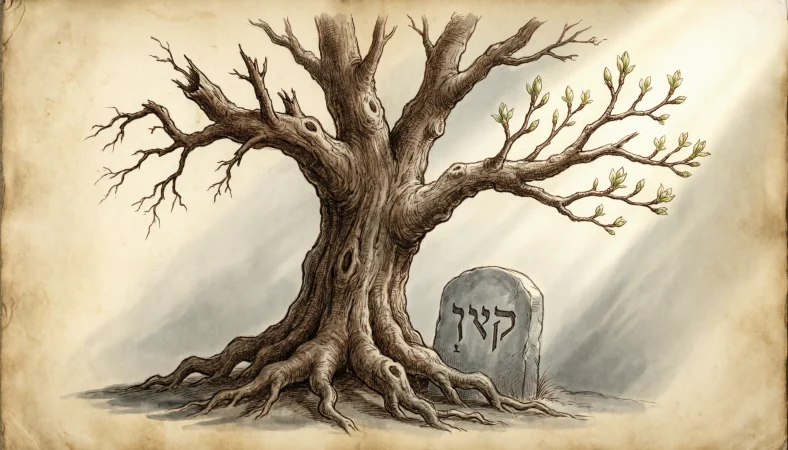
The cain meaning in the bible is closely connected with the first family, human sin, jealousy, and the tragic consequences of allowing anger to control the heart.
Cain was the first son of Adam and Eve and became known for bringing an offering to God, becoming angry when his offering was not regarded as Abel’s was, and ultimately killing his brother.
His story appears in Genesis 4 and is one of the Bible’s earliest accounts of how sin can grow when it is not confronted.
Understanding the cain meaning in the bible involves more than simply learning the meaning of his name.
Cain’s life provides a powerful spiritual lesson about worship, jealousy, responsibility, temptation, judgment, and God’s mercy.
Although Cain’s actions were deeply sinful, his story also shows that God continued to speak to him and placed a protective mark on him after his punishment.
His account remains relevant for anyone seeking to understand the Bible’s teaching about human choices and the consequences of unchecked anger.
Quick Answer: What Does Cain Mean in the Bible?
Cain is the first son of Adam and Eve and the older brother of Abel. His name is traditionally associated with the Hebrew word qanah, meaning “to acquire,” “to possess,” or “to get,” although the biblical narrative also connects his name with Eve’s statement about acquiring a man with the help of the Lord. Cain represents jealousy, anger, sin, and the consequences of refusing to master destructive desires.
What Is the Meaning of Cain in the Bible?
The name Cain is commonly understood from the Hebrew Qayin (קַיִן). Genesis 4:1 records Eve giving birth to Cain and saying that she had “gotten” or “acquired” a man with the help of the Lord.
Therefore, the basic name meaning is often connected with ideas such as:
| Element | Meaning |
|---|---|
| Hebrew name | Qayin |
| Common meaning | Acquired, gotten, or possession |
| Biblical connection | Eve’s statement at Cain’s birth |
| Main biblical figure | First son of Adam and Eve |
| Major theme | Sin, jealousy, anger, and responsibility |
The meaning of Cain’s name should not be confused with the entire theological meaning of his story. His name has a linguistic meaning, while his biblical character carries broader symbolic lessons.
Cain’s Origin and Family History
Cain became a farmer, while Abel became a keeper of sheep. Both brothers brought offerings to God. Abel brought portions from the firstborn of his flock, while Cain brought an offering from the fruit of the ground.
The biblical account says that God regarded Abel and his offering, but Cain and his offering were not regarded in the same way. The text then describes Cain becoming angry and deeply troubled.
Cain and Abel: The Central Biblical Story
The story of Cain and Abel is found in Genesis 4:1–16. It is one of the most important early narratives in Scripture because it shows how sin affects relationships.
God warned Cain that sin was waiting at the door and that he needed to rule over it. Instead of responding to the warning, Cain spoke with Abel and killed him in the field.
God then asked Cain where his brother was. Cain responded with the famous question, “Am I my brother’s keeper?”
Why Was Cain’s Offering Rejected?
One of the most frequently asked questions about Cain concerns his offering. Genesis says that Abel’s offering was regarded while Cain’s was not, but the passage does not provide every detail about why.
Later biblical passages provide additional insight. Hebrews 11:4 emphasizes Abel’s faith, describing his offering as being given through faith. First John 3:12 also connects Cain’s evil actions with his brother’s righteousness.
It is therefore too simplistic to say that God rejected Cain merely because he brought vegetables or because agricultural offerings were unacceptable. The Bible itself records acceptable offerings from agricultural produce elsewhere.
Spiritual Meaning of Cain
The cain meaning in the bible carries an important spiritual dimension because Cain’s life illustrates what can happen when anger and jealousy are allowed to grow.
Cain initially experienced disappointment. Disappointment itself was not necessarily sinful. His response to that disappointment became the problem.
The spiritual lessons include:
- Jealousy can damage relationships.
- Anger needs to be confronted before it controls behavior.
- God warns people before destructive choices.
- Human beings remain responsible for their actions.
- Sin can begin internally before becoming externally visible.
- God’s judgment and mercy can exist together.
Cain’s story therefore encourages believers to examine the heart rather than focusing only on outward actions.
Cain as a Symbol of Jealousy and Uncontrolled Anger
In Christian interpretation, Cain is often used as an example of jealousy, hatred, and uncontrolled anger.
His problem was not simply that he felt disappointed. The deeper problem was what he did with that disappointment. Instead of accepting correction and changing his response, Cain allowed resentment toward Abel to grow.
This provides a practical lesson for modern life. Envy can begin quietly when someone compares their success, possessions, relationships, appearance, or opportunities with another person’s.
The story of Cain warns that unchecked resentment can eventually affect both the person experiencing it and the people around them.
What Does Cain Teach About Sin?
Cain’s story gives a vivid picture of the progression of sin.
God tells Cain that sin is crouching at the door and desires him, but Cain must rule over it. This imagery presents sin as something dangerous that seeks control.
The lesson is significant: temptation does not automatically determine a person’s actions.
People still have choices.
Cain was warned before he killed Abel. His story therefore highlights the importance of recognizing destructive thoughts and responding to them before they develop into harmful behavior.
Cain’s Punishment and God’s Mercy
After killing Abel, Cain was punished by becoming a restless wanderer. The ground would no longer provide its strength to him in the same way.
This part of the story demonstrates an important biblical theme: judgment does not necessarily eliminate mercy.
Cain faced serious consequences, yet God prevented others from taking revenge against him.
Cain and the Broader Biblical Connection
Cain’s story is referenced elsewhere in the New Testament. First John uses Cain as an example of someone whose actions were evil, while Jude refers to people who have “gone in the way of Cain.”
Hebrews also contrasts Cain and Abel by highlighting Abel’s faith.
These references show that Cain became more than an Old Testament character. His name became associated with a pattern of sinful behavior, especially hatred, jealousy, and opposition to righteousness.
| Biblical reference | Main lesson |
|---|---|
| Genesis 4 | Cain and Abel’s story |
| Hebrews 11:4 | Abel’s faith |
| 1 John 3:12 | Cain’s evil actions |
| Jude 1:11 | “Way of Cain” as a warning |
Cain vs. Abel: A Biblical Comparison
| Cain | Abel |
|---|---|
| Older brother | Younger brother |
| Farmer | Shepherd |
| Brought an offering from the ground | Brought an offering from his flock |
| Became angry and jealous | Presented as righteous and faithful |
| Killed his brother | Became the victim |
| Became a wandering exile | Remembered for faith |
This comparison should not be reduced to occupations or types of offerings. The central contrast concerns their responses to God and the condition expressed through their actions.
Common Misconceptions About Cain
Several misconceptions surround the cain meaning in the bible.
Misconception 1: Cain’s name means “evil.”
Cain’s name is not simply a Hebrew word meaning evil. Its linguistic association is generally connected with acquiring or possessing.
Misconception 2: God rejected Cain because farming was wrong.
The Bible does not teach that farming was inherently unacceptable to God.
Misconception 3: Cain had no warning.
Genesis specifically records God warning Cain about sin before the murder.
Cain’s Cultural and Modern Usage
The name Cain continues to appear in literature, art, religious discussion, and popular culture. Because of the biblical story, it can carry negative symbolic associations involving jealousy, betrayal, violence, or fraternal conflict.
At the same time, a person named Cain should not automatically be associated with the character’s sinful behavior. Names can have historical and linguistic meanings that are separate from the actions of biblical characters who carried them.
Why Do People Search for Cain’s Biblical Meaning?
People commonly search for the cain meaning in the bible for several reasons. Parents may be researching biblical names, Bible readers may want to understand Genesis, and students may be studying the Cain and Abel narrative.
Others are interested in Cain’s spiritual symbolism or want to understand why his offering was rejected.
The most helpful approach is to consider the name, narrative, and broader biblical references together rather than assigning one simple meaning to Cain.
What Is the Spiritual Lesson of Cain’s Story?
The deepest lesson is that destructive emotions need to be confronted before they become destructive actions.
Cain experienced anger, but God gave him an opportunity to respond differently. The warning about sin “crouching” at the door emphasizes the importance of self-control.
The story also teaches that God sees hidden wrongdoing. Cain tried to avoid responsibility, but Abel’s blood symbolically cried out from the ground.
For Christians, the account can serve as a reminder to deal honestly with jealousy, resentment, anger, and comparison. Forgiveness, humility, repentance, and self-control are healthier responses than allowing resentment to take root.
Final Summary: What Does Cain Mean in the Bible?
The cain meaning in the bible is connected linguistically with the idea of being acquired or gotten, but the biblical significance of Cain goes much deeper. Cain was Adam and Eve’s first son, the brother of Abel, and the first person in Scripture described as committing murder.
His story warns about jealousy, anger, sin, and the refusal to accept correction. At the same time, Cain’s punishment and protection demonstrate that biblical justice can exist alongside mercy.
Final Thought
The story of Cain remains one of the Bible’s most powerful warnings about the consequences of unchecked anger and jealousy.
The cain meaning in the bible becomes clearer when his name is considered alongside his actions and God’s warning to him.
Cain had an opportunity to respond differently, but he allowed resentment to control him. His experience reminds readers that difficult emotions do not have to determine their choices.
God’s conversation with Cain also shows that divine correction can come before serious consequences.
Ultimately, Cain’s story encourages self-examination, responsibility, humility, and self-control. It reminds us that what begins in the heart can eventually shape our actions, relationships, and future.
Frequently Asked Questions
1. What does Cain mean in the Bible?
Cain’s Hebrew name is commonly associated with the idea of acquiring, getting, or possessing. His biblical significance is strongly connected with his story in Genesis.
2. Who was Cain in the Bible?
Cain was the first son of Adam and Eve and the older brother of Abel. He was a farmer who later killed Abel.
3. Why did Cain kill Abel?
Cain became angry and jealous after God regarded Abel and his offering but did not regard Cain and his offering in the same way. His anger eventually led to murder.
4. What is Cain’s spiritual meaning?
Cain commonly symbolizes jealousy, uncontrolled anger, sinful choices, and the consequences of refusing to master destructive desires.
5. What was Cain’s punishment?
Cain was condemned to become a restless wanderer, and the ground would no longer yield its strength to him as before.
6. What was the mark of Cain?
Genesis says God placed a sign or mark on Cain to protect him from being killed. Scripture does not describe exactly what the mark looked like.
7. What can Christians learn from Cain?
Cain’s story teaches the importance of controlling anger, resisting jealousy, accepting correction, taking responsibility, and dealing with sinful attitudes before they lead to harmful actions.

David William is a dedicated writer and spiritual enthusiast with a deep passion for sharing biblical wisdom. As the author behind Biblenast, he focuses on delivering meaningful scripture-based content that inspires faith, reflection, and daily guidance. His mission is to make the teachings of the Bible accessible, uplifting, and relevant to modern life.