
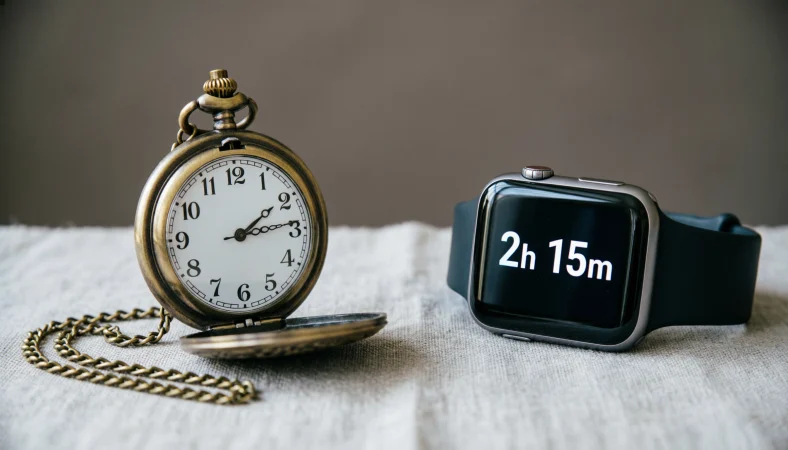
If you have ever wondered if to say “couple of hours” vs “couple hours,” you are dealing with a small surprisingly common English usage question.
Both expressions can be heard in everyday conversation, especially in American English, but they do not have exactly the same level of formality or grammatical tradition.
Choosing the right form depends largely on your audience, writing style, and variety of English.
The safest and most widely accepted expression is “a couple of hours.” It means approximately two hours, although “a couple” can sometimes be used more loosely to mean a small number.
“A couple hours” is also common, particularly in informal American English. This guide explains when each form works, why the difference exists, and which option is best for formal writing, conversation, school, business, and everyday messages.
Quick Answer: Couple of Hours vs Couple Hours
The standard form is “a couple of hours.”
For example:
“I’ll be there in a couple of hours.”
“A couple hours” is also widely used in informal American English, especially in casual speech and writing:
“I’ll be there in a couple hours.”
Both are commonly understood to mean approximately two hours.
The simple rule
- A couple of hours → standard, traditional, and safest in all varieties of English
- A couple hours → common informal American English
- Couple of hours → often heard informally when the article “a” is omitted
- Couple hours → informal and conversational, particularly in American English
If you are writing something formal, professional, academic, or intended for an international audience, “a couple of hours” is the best choice.
What Does “A Couple of Hours” Mean?
“A couple of hours” generally means approximately two hours.
For example:
“The journey will take a couple of hours.”
This usually means the journey will take around two hours, although the speaker may not mean exactly 120 minutes.
The word couple traditionally means two people or things considered together. In time expressions, however, it is often used approximately.
For example:
- “Wait a couple of minutes.”
- “I’ll call you in a couple of days.”
- “She stayed for a couple of weeks.”
- “It happened a couple of years ago.”
In all these expressions, a couple of suggests a small number, usually around two.
What Does “A Couple Hours” Mean?
“A couple hours” has essentially the same meaning as “a couple of hours.”
The main difference is grammatical style and regional usage.
For example:
“I worked for a couple hours.”
This sounds natural to many American English speakers, particularly in casual conversation.
In more traditional or formal English, however, many editors and teachers would prefer:
“I worked for a couple of hours.”
The word of is not necessary for understanding the meaning, but retaining it makes the phrase more conventional and broadly acceptable.
Couple of Hours vs Couple Hours: Comparison Table
| Expression | Meaning | Usage | Formality |
|---|---|---|---|
| A couple of hours | Approximately two hours | Standard English | Formal and informal |
| A couple hours | Approximately two hours | Common informal American English | Informal |
| Couple of hours | Approximately two hours | Informal omission of “a” | Informal |
| Couple hours | Approximately two hours | Casual American usage | Very informal |
| Two hours | Exactly two hours | Precise time | Neutral |
The important distinction is that “a couple of hours” is the safest standard form, while the shortened versions are more conversational.
Why Do People Say “A Couple Hours”?
English speakers often shorten phrases in casual conversation.
American English, in particular, frequently allows couple to function in expressions without the traditional of.
For example:
“Give me a couple minutes.”
“I’ll be back in a couple hours.”
“We stayed there for a couple days.”
These forms are extremely common in informal American speech.
They are easy to understand and widely used, but that does not necessarily mean they are the preferred choice in formal writing.
This is an important distinction between real-world usage and formal editing conventions.
Is “A Couple Hours” Grammatically Correct?
In contemporary informal American English, “a couple hours” is widely accepted and natural.
However, traditional grammar guidance generally favors “a couple of hours.”
So the answer depends on context.
In casual conversation
“I’ll see you in a couple hours.”
Natural and common.
In a professional email
“I’ll send the report in a couple of hours.”
More polished and universally acceptable.
In academic writing
“The participants were observed for a couple of hours.”
Even better, if precision matters:
“The participants were observed for approximately two hours.”
The key is not simply whether one version can be heard in everyday English. It is whether the expression fits your audience and purpose.
American vs British English Differences
The difference between these expressions is especially noticeable when comparing American and British English.
American English
American speakers commonly use:
“a couple hours”
especially in casual conversation.
Examples:
- “I’ll be home in a couple hours.”
- “It took a couple hours.”
- “Give me a couple hours to finish.”
The version without of is familiar and natural in informal American English.
British English
British English more commonly favors:
“a couple of hours”
Examples:
- “I’ll be back in a couple of hours.”
- “It took a couple of hours.”
- “Give me a couple of hours to finish.”
British speakers certainly understand “a couple hours,” and it may occur in informal speech, but “a couple of hours” is generally the safer traditional construction.
The practical rule
If you want wording that works naturally for both American and British audiences, choose:
“a couple of hours.”
Does “Couple of Hours” Mean Exactly Two Hours?
Not necessarily.
This is an important point.
The word couple literally relates to two, but in ordinary conversation “a couple of hours” can be approximate.
For example:
“I’ll be there in a couple of hours.”
The speaker probably means around two hours, but they may arrive after 1 hour and 45 minutes or perhaps after 2 hours and 15 minutes.
If exact timing matters, use a precise expression:
“I’ll be there in exactly two hours.”
Or:
“I’ll arrive at 4:00 p.m.”
This distinction matters in schedules, appointments, instructions, and professional communication.
Examples of “A Couple of Hours”
Here are natural examples using the standard form:
- “I need a couple of hours to finish the project.”
- “We drove for a couple of hours.”
- “She’ll be back in a couple of hours.”
- “It took a couple of hours to repair the car.”
- “I spent a couple of hours reading.”
- “The meeting lasted a couple of hours.”
- “Give me a couple of hours to think about it.”
- “They waited for a couple of hours.”
These sentences work naturally in both American and British English.
Examples of “A Couple Hours”
The following examples are common in casual American English:
- “I’ll call you in a couple hours.”
- “I need a couple hours to finish this.”
- “We drove for a couple hours.”
- “She’ll be home in a couple hours.”
- “Give me a couple hours and I’ll have it ready.”
These sentences sound conversational rather than formal.
In a text message to a friend, “a couple hours” is perfectly natural for many American speakers.
In a formal report, however, “a couple of hours” would usually be preferable.
Common Mistakes With Couple of Hours
Mistake 1: Leaving Out “A”
A common informal expression is:
“I’ll be there in couple of hours.”
This is generally considered nonstandard in careful English.
The better form is:
“I’ll be there in a couple of hours.”
The article a normally belongs before “couple” in this expression.
Mistake 2: Assuming “Couple Hours” Is Always Wrong
It is too simplistic to say that “couple hours” is always incorrect.
It is widely used in informal American English.
The better advice is to understand register.
Use “a couple hours” casually, but use “a couple of hours” when you want the safest standard form.
Mistake 3: Using “Couple” When You Mean an Exact Two Hours
If timing is critical, “a couple of hours” can be too vague.
For example, a doctor, airline, employer, or technician may need to provide a precise estimate.
Instead of:
“It will take a couple of hours.”
You could say:
“It will take approximately two hours.”
Or, when the time is exact:
“It will take two hours.”
Mistake 4: Confusing “Couple” With “Few”
“A couple” traditionally means two, while “a few” usually means more than two but still a small number.
Compare:
“I waited a couple of hours.”
This suggests around two hours.
“I waited a few hours.”
This suggests several hours, perhaps three or more.
The exact boundary is flexible in everyday conversation.
“A Couple of Hours” vs “Two Hours”
These expressions are related but not identical.
A couple of hours is approximate.
Two hours is more precise.
Compare:
“The movie lasted a couple of hours.”
This gives a rough estimate.
“The movie lasted two hours.”
This suggests a more exact duration.
When writing schedules, instructions, scientific material, contracts, or business documents, precision is often more useful.
“Couple of Hours” vs “A Couple of Hours”
There is another small distinction worth understanding.
“A couple of hours” is the standard expression.
For example:
“I’ll finish it in a couple of hours.”
But you may sometimes see “couple of hours” without the article in informal speech:
“It took couple of hours.”
This is generally considered nonstandard in careful English.
For polished writing, keep the article:
a couple of hours
This applies to similar expressions:
- a couple of days
- a couple of weeks
- a couple of months
- a couple of years
- a couple of minutes
Which Version Should You Use?
Your choice should depend on the situation.
Use “a couple of hours” when:
- Writing professionally
- Writing academically
- Writing for an international audience
- Preparing formal documents
- Communicating with customers
- Writing an article or report
- You want the safest standard English
Use “a couple hours” when:
- Texting friends
- Writing casual messages
- Speaking informally
- Using conversational American English
- Reproducing natural dialogue
When in doubt, choose “a couple of hours.”
It is natural, clear, widely understood, and appropriate across English varieties.
Related Expressions and LSI Keywords
Several related time expressions can help you communicate duration naturally:
- Approximately two hours
- Around two hours
- About two hours
- Two or three hours
- A few hours
- Several hours
- Within a couple of hours
- In a couple of hours
- For a couple of hours
- After a couple of hours
- Over the next couple of hours
- A short while
- A few hours later
These phrases are useful alternatives depending on how precise you need to be.
Frequently Asked Questions
Is “a couple of hours” grammatically correct?
Yes. “A couple of hours” is the standard and widely accepted form in English. It generally means approximately two hours.
Is “a couple hours” correct?
Yes, particularly in informal American English. It is common in casual speech and writing, although “a couple of hours” is more traditional and formal.
Which is better: couple of hours or couple hours?
“A couple of hours” is the safest choice. “A couple hours” is common in informal American English but is less formal.
Is “couple of hours” without “a” correct?
In standard careful English, it is better to say “a couple of hours.” Omitting the article is common in casual speech but should generally be avoided in formal writing.
Does “a couple of hours” mean exactly two hours?
Not always. It usually means around two hours and can be approximate. If exact timing matters, simply say “two hours” or provide a specific time.
Do British people say “a couple hours”?
British English generally favors “a couple of hours.” “A couple hours” is much more strongly associated with informal American usage.
Can I use “a couple hours” in a formal email?
You can, but “a couple of hours” is the more polished choice. It sounds natural without being overly formal.
What is the difference between “a couple of hours” and “a few hours”?
“A couple of hours” usually suggests around two hours, while “a few hours” generally suggests a small number of hours, often more than two.
Final Summary
The main difference between “couple of hours” vs “couple hours” is not their basic meaning but their style and regional usage.
“A couple of hours” is the standard, traditional, and safest expression for approximately two hours.
It works naturally in American English, British English, professional communication, academic writing, and everyday conversation.
“A couple hours” carries essentially the same meaning and is particularly common in informal American English.
It is perfectly understandable and natural in casual contexts, but it may sound less polished in formal writing.
The safest general rule is simple: when you are unsure, use “a couple of hours.”
Actionable Takeaway
For everyday or formal English, choose “a couple of hours.” Use “a couple hours” when writing casual American-style dialogue, texts, or informal messages.
If you need an exact duration rather than an estimate, skip both and say “two hours” or give the precise time.

John Robert is a passionate author and faith-driven writer who contributes insightful and inspiring biblical content to Biblenast. With a strong commitment to sharing God’s Word, he focuses on creating meaningful messages that encourage spiritual growth, reflection, and daily guidance. His work aims to connect readers with the timeless teachings of the Bible.