
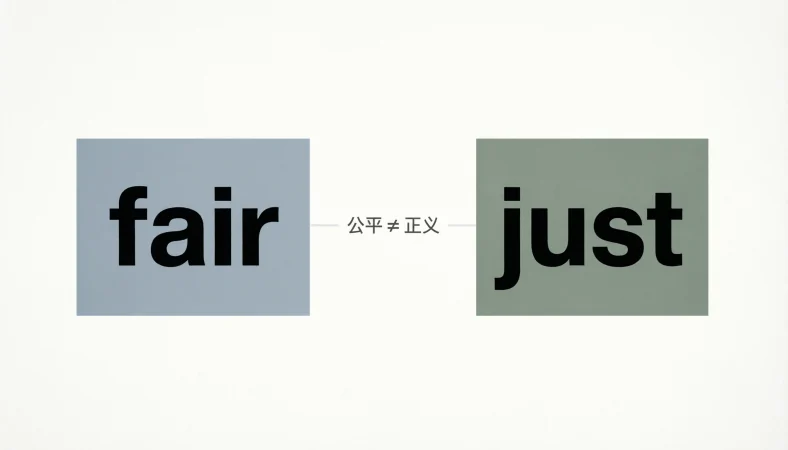
Choosing between fair vs just can be confusing because both words are commonly used to describe something reasonable, impartial, or morally right.
In many sentences, they can even appear interchangeable. However, they carry slightly different shades of meaning depending on context.
Just, on the other hand, is more strongly connected with morality, righteousness, law, and what is considered ethically right.
Understanding the distinction can help you choose the more precise word in writing and everyday conversation.
Quick Answer
Fair vs just: Fair usually means reasonable, impartial, or treating people equally, while just often means morally right, lawful, or deserved.
For example, “a fair decision” emphasizes impartial treatment, while “a just decision” emphasizes moral or ethical correctness.
What Does “Fair” Mean?
The adjective fair has several meanings, but when discussing decisions, treatment, or behavior, it generally means reasonable, impartial, or free from favoritism.
If someone receives the same opportunity as others, the situation may be described as fair. Likewise, a judge, teacher, employer, or parent may be called fair when they treat people impartially.
Examples:
- The teacher gave everyone a fair chance.
- That seems like a fair price.
- The referee made a fair decision.
- Everyone deserves fair treatment.
Fairness is often associated with equality, balance, and reasonable treatment.
However, fair does not always mean that everyone receives exactly the same thing. Sometimes a fair outcome means taking different circumstances into account.
What Does “Just” Mean?
Just can also mean reasonable or correct, but it has a stronger connection to morality, righteousness, law, and deserved consequences.
A just decision is generally one that follows principles of right and wrong. The word is particularly common in formal, legal, philosophical, and religious contexts.
Examples:
- The punishment was just.
- People should be treated according to just laws.
- The king was known as a just ruler.
- She wanted a just resolution to the dispute.
When you use just in this sense, you are usually emphasizing whether something is morally or ethically right rather than simply whether it appears balanced.
Fair vs Just: The Main Difference
The simplest way to understand fair vs just is to focus on the emphasis of each word.
| Word | Main Meaning | Common Focus | Example |
|---|---|---|---|
| Fair | Reasonable and impartial | Equality and treatment | Everyone received a fair chance. |
| Just | Morally right or deserved | Justice and morality | The punishment was just. |
| Fair | Free from favoritism | Balance | She made a fair decision. |
| Just | Lawful or righteous | Ethical correctness | He believed it was a just law. |
In everyday situations, fair is usually more natural. Just can sound more formal or philosophical.
Is Fair the Same as Just?
The two words overlap, but they are not always identical.
Consider a teacher who gives every student exactly the same amount of time to complete an assignment. This may be called fair because everyone receives equal treatment.
But imagine one student has a documented circumstance that requires additional time. Giving that student extra time could still be considered fair, even though the treatment is not identical.
A just decision would focus more heavily on whether the outcome respects relevant moral principles and what each person deserves.
Therefore, fairness often asks:
“Is everyone being treated reasonably?”
Justice may ask:
“Is the outcome morally right and deserved?”
The distinction is not absolute, but it is useful when choosing between the words.
Fair: Meaning, Examples, and Usage
Fair is extremely common in everyday English.
It can describe:
- Decisions
- Prices
- Opportunities
- Rules
- Treatment
- Competition
- Agreements
- Judgments
Examples:
- We need a fair agreement.
- The store offers a fair price.
- The competition was fair.
- The manager gave both employees a fair opportunity.
- That doesn’t seem fair.
The word can also have meanings unrelated to justice. For example, fair can describe light coloring or a public event:
- She has fair hair.
- We visited the county fair.
The context determines which meaning is intended.
Just: Meaning, Examples, and Usage
When just means morally right or fair, it frequently appears in serious or formal contexts.
Examples include:
- a just society
- a just punishment
- a just cause
- a just ruler
- a just law
- a just decision
For example:
The citizens demanded a just system of laws.
Here, just suggests more than equal treatment. It expresses the idea that the system should be morally right and deserving of respect.
However, just has several other meanings in English. It can mean “only,” “recently,” or “exactly.”
Examples:
- I just arrived.
- It is just a suggestion.
- That is just what I needed.
These meanings have nothing to do with justice or fairness.
Fair vs Just in Everyday Sentences
The best choice often depends on what you want to emphasize.
| Sentence | Natural Word | Why? |
|---|---|---|
| Everyone deserves ___ treatment. | Fair | Focuses on treatment |
| The judge made a ___ decision. | Just | Emphasizes morality and justice |
| That is a ___ price. | Fair | Means reasonable |
| The punishment was ___. | Just | Means deserved or morally appropriate |
| She gave both candidates a ___ opportunity. | Fair | Focuses on equal opportunity |
| They fought for a ___ society. | Just | Emphasizes moral justice |
In some cases, either word can work, but the meaning may shift slightly.
Fair vs Just in Legal and Moral Contexts
The distinction becomes particularly noticeable in discussions about law and morality.
Fair is often used when discussing how rules affect people:
- The process was fair.
- The candidates received fair treatment.
- The rules should be fair.
Just is frequently used when discussing whether a law, punishment, or social system is morally right:
- The law should be just.
- The punishment must be just.
- They sought a just resolution.
Legal and philosophical writing therefore tends to use just more frequently when discussing principles of justice.
That does not mean fair is incorrect in these contexts. In fact, phrases such as fair trial and fair treatment are extremely common.
Are Fair and Just Interchangeable?
Sometimes, but not always.
For example:
The manager made a fair decision.
This suggests that the manager considered the situation impartially and did not show favoritism.
You could potentially say:
The manager made a just decision.
This sounds more formal and suggests that the decision was morally right or deserved.
Another example is:
The company offers fair wages.
This means the wages are considered reasonable or appropriate.
Replacing fair with just would make the sentence sound unusual in ordinary conversation:
The company offers just wages.
This is grammatically possible, but it has a more formal or moral tone.
Common Mistakes with Fair and Just
One common mistake is assuming that the words are always exact synonyms.
They overlap, but their typical uses differ.
Mistake 1: Using “Just” for Every Meaning of “Fair”
When discussing prices, opportunities, or ordinary treatment, fair is usually the more natural choice.
Incorrect or awkward in many everyday contexts:
That is a just price.
More natural:
That is a fair price.
Mistake 2: Assuming Fair Always Means Equal
Fairness does not necessarily mean identical treatment.
A fair decision may take individual circumstances into account.
Mistake 3: Confusing “Just” with Its Other Meanings
Remember that just can mean:
- Only
- Recently
- Exactly
- Morally right
The sentence determines the meaning.
Fair vs Just: Origin and Word History
The two words have different historical backgrounds.
Fair comes from Old English fæger, which originally carried meanings connected with beauty and attractiveness.
Over time, its meanings expanded to include ideas such as pleasing appearance, impartiality, reasonable treatment, and acceptable conditions.
Just comes through Old French from Latin iustus, meaning righteous, lawful, or upright.
Its historical connection to law and morality explains why it is commonly used in discussions of justice and ethical behavior.
| Word | Historical Source | Traditional Association | Modern Uses |
|---|---|---|---|
| Fair | Old English | Beauty and pleasantness | Equality, reasonableness, impartiality |
| Just | Latin iustus through French | Lawfulness and righteousness | Morality, justice, deserving treatment |
Fair vs Just in American and British English
There is generally no major difference between American and British English in the basic meanings of fair and just.
Both varieties commonly use:
- fair treatment
- fair price
- fair chance
- fair competition
- just decision
- just law
- just punishment
- just society
The distinction is primarily about context and meaning, rather than regional grammar.
Some expressions may vary in frequency between speakers, but the fundamental difference remains consistent in both forms of English.
How to Remember the Difference
A simple memory trick can make the distinction easier:
Fair = reasonable and impartial.
Just = morally right and deserved.
Think of fair as focusing on how people are treated, while just often focuses on what is right.
For example:
The teacher gave every student a fair opportunity.
The emphasis is on equal and reasonable treatment.
The punishment was just.
The emphasis is on whether the punishment was deserved and morally appropriate.
This shortcut will not cover every possible use, but it works well for everyday writing.
Fair vs Just: Which Word Should You Use?
When deciding between fair vs just, first consider the context.
Use fair when you mean:
- Reasonable
- Impartial
- Balanced
- Equal or appropriately distributed
- Free from favoritism
Use just when you mean:
- Morally right
- Righteous
- Lawful
- Deserved
- Connected with principles of justice
Quick Comparison
| If You Mean… | Use |
|---|---|
| Reasonable price | Fair |
| Equal opportunity | Fair |
| Impartial treatment | Fair |
| Morally right decision | Just |
| Deserved punishment | Just |
| Righteous ruler | Just |
| Ethical society | Just |
Final Summary: Fair vs Just
The difference between fair vs just is subtle but important. Fair generally describes something reasonable, impartial, or appropriately balanced, particularly when discussing treatment, , prices, and decisions.
Just usually carries a stronger moral, legal, or ethical meaning and describes something considered righteous, deserved, or morally correct.
Although the words can overlap, they are not perfect substitutes. If you are talking about equal or reasonable treatment, fair is usually the choice.
If you are emphasizing morality, justice, or what someone deserves, just is often more precise.
Final Thought
Understanding fair vs just can make your English more precise because both words describe positive ideas while emphasizing different aspects of a situation.
Fair usually focuses on reasonable or impartial treatment, while just often highlights morality, , law, or what is deserved.
In casual conversations, “fair” is especially common when discussing prices, opportunities, rules, and treatment.
“Just” tends to appear more often in formal, ethical, legal, and philosophical discussions. When you are unsure, ask yourself if you are describing reasonable treatment or emphasizing moral correctness.
FAQs About Fair vs Just
1. What is the difference between fair and just?
Fair generally means reasonable or impartial, while just often means morally right, lawful, or deserved.
2. Can fair and just be used interchangeably?
Sometimes, but not always. They overlap in meaning, yet fair often emphasizes treatment and just emphasizes morality or justice.
3. Is a fair decision the same as a just decision?
They can describe the same decision, but the emphasis differs. A fair decision may be impartial, while a just decision suggests moral or ethical correctness.
4. Is “fair price” correct?
Yes. Fair price is a very common expression meaning a price that is reasonable or appropriate.
5. Is “just price” correct?
It is grammatically possible, but it is much less common in everyday English. Fair price is normally more natural.
6. Which word is more common in everyday English?
Fair is generally more common for everyday situations involving prices, treatment, opportunities, and decisions.
7. How can I easily remember fair vs just?
Remember: fair means reasonable or impartial; just means morally right or deserved.

John Robert is a passionate author and faith-driven writer who contributes insightful and inspiring biblical content to Biblenast. With a strong commitment to sharing God’s Word, he focuses on creating meaningful messages that encourage spiritual growth, reflection, and daily guidance. His work aims to connect readers with the timeless teachings of the Bible.