
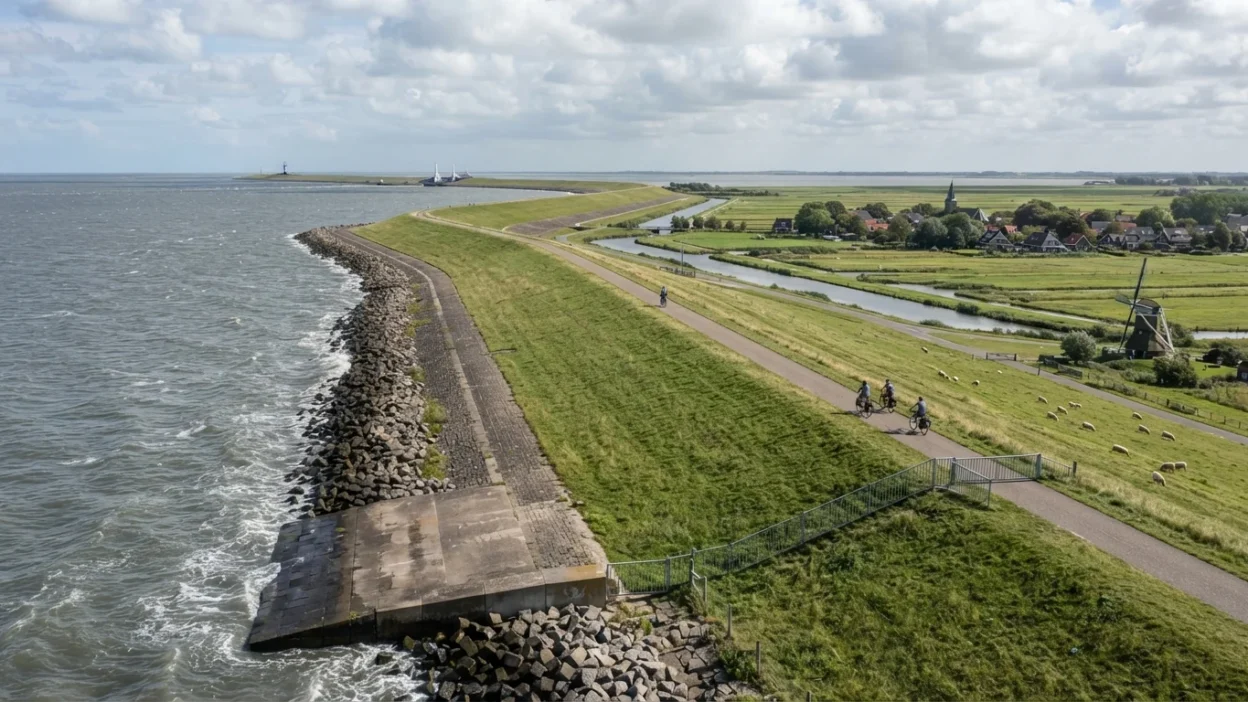
If you have ever wondered whether the correct spelling is dike or dyke, you are not alone. Both forms are genuine English words, but the preferred spelling can depend on the meaning, t
he type of English being used, and the country or region. In many contexts, the words refer to a raised bank or barrier built to control water, while in geology they can describe a sheet of rock cutting through older rock formations.
The spelling becomes more interesting because dyke also has an important modern social meaning.
In particular, it can be a reclaimed term used by some lesbians, although it has historically been used as an offensive slur. Understanding the context is therefore essential.
This guide explains dike or dyke, shows when each spelling is appropriate, compares American and British English, and provides practical examples so you can choose the right word confidently.
Quick Answer: Dike or Dyke?
Dike and dyke are both correct spellings, but their usage varies.
- Dike is especially common in American English for a water-control embankment and in geological terminology.
- Dyke is traditionally common in British English for an embankment, drainage channel, or geological feature.
- Dyke also has a separate modern meaning referring to a lesbian, but the term can be offensive depending on who uses it and in what context.
- For general writing, choose the spelling that matches your audience, subject, and regional variety of English.
What Does “Dike” Mean?
The noun dike commonly refers to a raised bank, wall, or embankment designed to control water. It may be built beside a river, canal, lake, or coastal area to prevent flooding or manage drainage.
For example:
- The farmers built a dike to protect their fields from flooding.
- The town strengthened the dike before the storm arrived.
- Engineers inspected the dike after heavy rainfall.
In American English, dike is a common spelling for this meaning.
The word can also function as a verb. To dike an area means to surround or protect it with a dike.
Example:
Workers diked the low-lying area to prevent floodwater from spreading.
What Does “Dyke” Mean?
Dyke has several meanings. In British English, it can refer to a bank or embankment built to control water, similar to dike.
For example:
- The village was protected by a large dyke.
- The farmer repaired the drainage dyke after the storm.
- The road runs alongside an ancient dyke.
The spelling dyke is particularly associated with British English and can appear in historical, geographical, and engineering contexts.
However, dyke also has a completely different social meaning. It has historically been used as a derogatory term for a lesbian. Today, some lesbians and LGBTQ+ communities have reclaimed the word and use it as a self-descriptive or community term. Because its acceptability depends heavily on context, identity, audience, and intent, writers should use it thoughtfully.
Dike vs Dyke: The Main Difference
The simplest distinction is regional spelling when the word means a water barrier or embankment.
| Feature | Dike | Dyke |
|---|---|---|
| Water barrier | Common | Common |
| American English | Preferred/common | Less common |
| British English | Used | Traditionally preferred |
| Geological feature | Common | Common |
| Verb form | Dike | Dyke |
| Modern LGBTQ+ meaning | Generally not used for this meaning | Yes |
| Formal writing | Appropriate in relevant contexts | Appropriate depending on meaning and audience |
The words are therefore not simply a case of one being correct and the other being incorrect.
Dike or Dyke in American English
In American English, dike is generally the preferred spelling when referring to an embankment or barrier designed to control water.
Examples include:
- flood dike
- river dike
- agricultural dike
- drainage dike
- coastal dike
For example:
The city constructed a new dike along the river.
American English also commonly uses dike in geology.
If you are writing for a U.S. audience and discussing flood protection, dike is usually the safest choice.
Dike or Dyke in British English
In British English, dyke is a traditional spelling for an embankment or drainage structure.
For example:
The ancient dyke separated the fields.
British English also uses dyke in place names and historical references.
One famous example is Offa’s Dyke, a large linear earthwork traditionally associated with the Anglo-Saxon king Offa of Mercia. Because it is a proper name, its established spelling should be preserved.
This is a useful reminder that spelling is sometimes determined not only by grammar but also by regional convention, history, and proper names.
Dike or Dyke in Geology
Both dike and dyke can describe a geological formation.
A geological dike/dyke is a sheet of rock that cuts across existing layers or structures. It commonly forms when magma moves through cracks in surrounding rock and later cools and solidifies.
For example:
Geologists discovered a basalt dike beneath the surface.
You may encounter both spellings in geological literature, although dike is particularly common in American scientific writing.
The important thing is consistency. If your publication follows American English, dike will generally fit better. If you are following a British style guide or discussing a British source, dyke may be preferred.
What Is the Origin of Dike and Dyke?
The two spellings have a long shared history.
The word is related to older Germanic words associated with digging, earthworks, banks, and defensive structures. This history helps explain why the word can refer to both a ditch and a raised embankment in different contexts.
Interestingly, the related terms developed somewhat differently across English varieties.
In modern usage:
- dike is strongly associated with American English in many technical contexts.
- dyke remains strongly associated with British English in certain geographical and historical contexts.
The spelling differences are therefore largely historical and regional rather than evidence that one word is grammatically superior.
Dike and Dyke in Flood Control
One of the most common meanings of dike/dyke involves flood protection.
A dike is typically an engineered or naturally elevated barrier intended to keep water away from land or to guide water through a particular area.
Examples:
- The coastal dike protects homes from storm surges.
- Engineers reinforced the river dike.
- The agricultural fields depend on the drainage dyke.
- Heavy rain damaged several sections of the dike.
Related terms include:
- levee
- embankment
- flood barrier
- drainage bank
- flood defense
- seawall
- water-control structure
The exact meaning can vary because these structures are not always identical.
Dike vs Dyke vs Levee
People sometimes use dike, dyke, and levee interchangeably, but they are not always perfect synonyms.
| Word | General meaning | Typical association |
|---|---|---|
| Dike | Raised barrier controlling water | American English |
| Dyke | Raised bank or water-control barrier | British English |
| Levee | Embankment protecting land from flooding | Especially common in U.S. flood-control contexts |
| Embankment | Raised structure of earth or other material | Broad engineering term |
| Seawall | Wall designed to resist coastal water | Coastal protection |
When precision matters, use the term appropriate to the structure being described.
The Modern Meaning of “Dyke”
The word dyke has a separate social and cultural meaning that should not be confused with the water-management or geological sense.
Historically, dyke was used as an insulting term for a lesbian. Over time, some lesbians and LGBTQ+ communities have reclaimed the term and use it positively or neutrally in particular contexts.
For example, you may encounter the word in:
- LGBTQ+ community names
- cultural events
- historical discussions
- political or social writing
- community organizations
- identity-based conversations
However, this does not mean that everyone considers the word acceptable in every situation.
If you are not using the term as part of a specific name, quotation, historical discussion, or relevant cultural context, alternatives such as lesbian are usually clearer and more respectful.
Context matters greatly.
Common Mistakes With Dike or Dyke
Mistake 1: Thinking One Spelling Is Always Wrong
It is incorrect to assume that either dike or dyke is universally wrong.
Both are established spellings.
Mistake 2: Ignoring Regional English
A U.S. publication may strongly favor dike, while a British publication may use dyke.
Always consider your intended audience.
Mistake 3: Changing a Proper Name
If you are referring to a recognized name such as Offa’s Dyke, do not automatically change dyke to dike just because you prefer American spelling.
Proper names normally retain their established spelling.
Mistake 4: Confusing the Meanings
Not every occurrence of dyke refers to a water barrier.
The word can have a geological meaning or a modern LGBTQ+ identity-related meaning.
Read the context before interpreting it.
Mistake 5: Using the Social Term Carelessly
Because the identity-related use has a history as a slur, it should not be treated as an ordinary synonym for lesbian in every context.
Consider the speaker, audience, purpose, and setting before using it.
How to Choose the Right Spelling
Use this simple checklist:
Writing for an American audience?
Choose dike for most water-control and geological contexts.
Writing for a British audience?
Dyke may be the more natural choice, particularly for traditional geographical meanings.
Referring to a specific place or proper name?
Keep its established spelling.
Discussing LGBTQ+ history or identity?
Use dyke only when the context genuinely calls for it, and be aware of its potentially offensive history.
Examples of Dike and Dyke in Sentences
Here are some natural examples:
- The engineers repaired the dike after the flood.
- The British village is protected by an old dyke.
- Scientists identified a volcanic dike beneath the mountain.
- Offa’s Dyke is an important historical earthwork.
- The coastal dike reduced the risk of flooding.
- The farmer inspected the drainage dyke.
- The geological survey documented several basalt dikes.
- The article discusses the historical use of dyke as an offensive term and its later reclamation by some lesbians.
These examples demonstrate why context is more useful than memorizing a single spelling.
FAQs About Dike or Dyke
Is “dike” or “dyke” correct?
Both are correct. For a water-control embankment, dike is especially common in American English, while dyke is traditionally common in British English.
Is “dyke” British or American?
For the traditional meaning of a water barrier or embankment, dyke is strongly associated with British English. American English generally favors dike in this context.
What is the American spelling of dyke?
For the water-management meaning, the usual American spelling is dike.
What is the British spelling of dike?
For many traditional geographical or water-control contexts, British English uses dyke.
Is a dike the same as a levee?
They can refer to similar flood-control structures, but the terms are not always technically interchangeable. Levee, dike, and embankment can have different regional or engineering uses.
Does “dyke” have another meaning?
Yes. Dyke has a modern LGBTQ+ identity-related meaning and has also historically been used as an offensive slur against lesbians. Some lesbians have reclaimed the term, so context is essential.
Should I use “dyke” in professional writing?
If you mean a water barrier or geological feature, use the spelling appropriate to your variety of English. If you mean the LGBTQ+ term, use it only when the context specifically warrants it and be sensitive to its history.
Which spelling should English learners remember?
A useful starting point is dike = common American spelling and dyke = common British spelling for the water-related meaning. Then remember that dyke has additional meanings that require attention to context.
Summary
The question of dike or dyke does not have a simple “right versus wrong” answer. Both spellings are legitimate, and the preferred form often depends on regional English and meaning. In American English, dike is generally the more familiar spelling for a raised barrier used for flood protection, drainage, or water management. In British English, dyke is traditionally common for similar structures. Both spellings can also appear in geology.
The word dyke deserves additional care because it has a separate cultural meaning connected with lesbian identity. It has a history as an offensive slur but has also been reclaimed by some members of the lesbian and LGBTQ+ communities. Therefore, context, audience, and intention matter. If you are writing about geography, engineering, geology, or history, simply choose the spelling that fits your regional style and preserve established proper names.
Actionable Takeaway
When deciding between dike or dyke, use these four rules:
- American English: Prefer dike for most water-control and geological contexts.
- British English: Dyke is often the traditional choice for water-related geographical features.
- Proper names: Keep the established spelling, such as Offa’s Dyke.
- Social or identity-related usage: Treat dyke as a context-sensitive term because of its history and modern reclaimed use.
The best spelling is ultimately the one that matches your meaning, audience, and style guide. Once you recognize those three factors, choosing between dike and dyke becomes much easier.

Michael James is the administrator and a dedicated author at Biblenast, responsible for managing the platform and ensuring quality content. Alongside his administrative role, he writes insightful biblical articles that inspire faith, reflection, and spiritual growth. His work supports the mission of making God’s Word accessible and meaningful.