
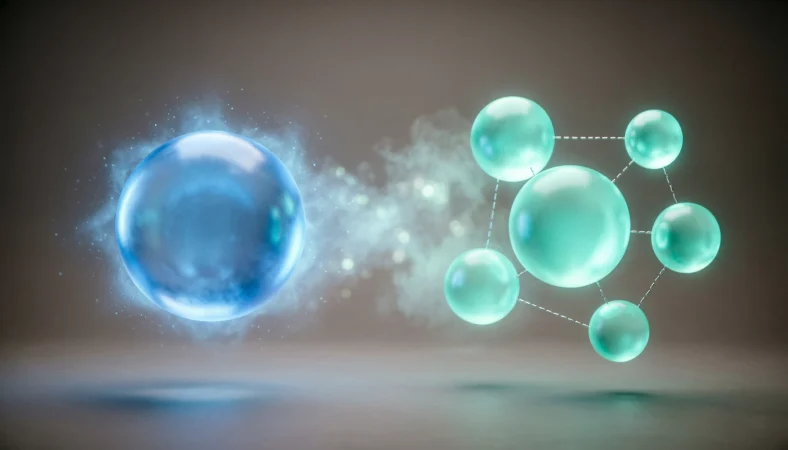
If you have ever wondered about phenomenon vs phenomena, you are not alone. These two words look almost identical, and both refer to events, facts, experiences, or things that can be observed.
The main difference is simple: phenomenon is singular, while phenomena is traditionally the plural form. Understanding this distinction can make your writing more precise, especially in academic, scientific, professional, and formal contexts.
The confusion often comes from the unusual-looking plural form. Instead of adding a typical ending such as “-s” or “-es,” phenomenon becomes phenomena.
Once you understand the singular and plural pattern, however, the difference becomes much easier to remember.
This guide explains the meaning of each word, provides clear examples, covers common mistakes, and shows you how to choose the right form naturally.
Quick Answer: Phenomenon vs Phenomena
Phenomenon is generally the singular noun, meaning one observable event, fact, experience, or unusual occurrence.
Phenomena is traditionally the plural form, meaning two or more observable events, facts, experiences, or occurrences.
- One event → a phenomenon
- Several events → phenomena
- One unusual occurrence → a phenomenon
- Several unusual occurrences → phenomena
For example:
The Northern Lights are a natural phenomenon.
Hurricanes, earthquakes, and tornadoes are natural phenomena.
What Does Phenomenon Mean?
A phenomenon is something that can be observed, experienced, or studied. It may be a natural event, a scientific occurrence, a social trend, or even something remarkable that attracts attention.
Merriam-Webster defines phenomenon as an observable fact or event and also uses the word for something unusual, important, or impressive. In scientific contexts, it can refer to a fact or event that deserves description and explanation.
The word can therefore be used in many situations.
Examples of phenomenon
- A solar eclipse is a natural phenomenon.
- The rapid growth of the company became a cultural phenomenon.
- Scientists are studying a strange atmospheric phenomenon.
- Her sudden popularity became a media phenomenon.
- The migration of birds is an interesting natural phenomenon.
Notice that each example describes one event, occurrence, trend, or subject.
What Does Phenomena Mean?
Phenomena is traditionally the plural of phenomenon. It refers to multiple observable events, experiences, or occurrences.
For example:
- Tornadoes and hurricanes are weather phenomena.
- Scientists study various physical phenomena.
- Social media has created new cultural phenomena.
- Optical phenomena can produce spectacular effects.
- Several unusual phenomena were recorded during the experiment.
If you can replace the noun with “events,” “occurrences,” or “experiences” in the plural, phenomena may be the appropriate choice.
Phenomenon vs Phenomena: The Main Difference
The simplest way to understand phenomenon vs phenomena is to think about number.
| Word | Number | Meaning | Example |
|---|---|---|---|
| Phenomenon | Singular | One observable event or fact | A rainbow is a natural phenomenon. |
| Phenomena | Plural | More than one observable event or fact | Rainbows and eclipses are natural phenomena. |
The distinction is similar to other words with Greek or Latin-derived plural forms. The important point is that phenomenon refers to one, while phenomena traditionally refers to more than one.
Phenomenon vs Phenomena Examples
Seeing the words in realistic sentences makes the difference much clearer.
Singular: phenomenon
Use phenomenon when you are talking about one thing.
- The eclipse was a remarkable phenomenon.
- Climate change is a complex global phenomenon.
- The scientist observed an unusual phenomenon.
- The singer quickly became a cultural phenomenon.
- Lightning is a fascinating atmospheric phenomenon.
Plural: phenomena
Use phenomena when discussing multiple things.
- Scientists study atmospheric phenomena.
- Several natural phenomena occurred during the storm.
- These social phenomena deserve further research.
- The researchers documented unusual psychological phenomena.
- Optical phenomena can be difficult to explain.
A useful test is to look at the word before the noun. If you use a, one, or this, the singular phenomenon is normally appropriate.
If you use these, those, several, many, or various, the plural phenomena is normally appropriate.
Why Is Phenomena the Plural of Phenomenon?
The unusual spelling comes from the word’s history. Phenomenon entered English through Latin from Greek, and phenomena reflects the Greek plural pattern.
That is why “phenomenons” is not normally the traditional plural in formal English. However, modern usage is more flexible than it once was.
Merriam-Webster lists phenomena as the traditional plural but also records phenomenons as a plural form. It also notes that phenomena has sometimes been used as a singular in English, although that usage remains nonstandard or borderline in many contexts.
For careful academic or professional writing, the safest pattern remains:
phenomenon → phenomena
Can Phenomena Be Singular?
This is one of the most interesting parts of the phenomenon vs phenomena question.
In contemporary English, you may occasionally encounter phenomena used as though it were singular. Merriam-Webster notes that this usage has existed for centuries and sometimes appears in edited prose, although it remains much less established than the traditional plural usage.
For example, someone might write:
The phenomenon is difficult to explain.
This is the clearest standard choice when referring to one event.
If you are writing an academic paper, business document, educational article, or formal report, it is generally better to avoid using phenomena as a singular noun.
Can You Say “Phenomenons”?
You may encounter phenomenons, particularly when the word is being treated as a regular English noun. Merriam-Webster recognizes it as a plural variant.
However, phenomena remains the more established traditional plural, especially in scientific and formal writing.
For example:
Preferred in formal writing:
Several interesting phenomena were observed.
Rather than:
Several interesting phenomenons were observed.
If your goal is polished, conventional English, use phenomena.
Common Mistakes With Phenomenon and Phenomena
These words are frequently confused because their plural relationship is unfamiliar.
Mistake 1: Using phenomena for one thing
Incorrect:
This phenomena is difficult to explain.
Better:
This phenomenon is difficult to explain.
Mistake 2: Using phenomenon for several things
Incorrect:
These phenomenon are common in nature.
Better:
These phenomena are common in nature.
Mistake 3: Adding an unnecessary plural ending
Less conventional:
Scientists studied several phenomenons.
Better in formal writing:
Scientists studied several phenomena.
Mistake 4: Forgetting subject-verb agreement
Incorrect:
These phenomena is fascinating.
Correct:
These phenomena are fascinating.
Because phenomena is traditionally plural, it normally takes a plural verb.
Subject-Verb Agreement With Phenomenon and Phenomena
This is an important grammar point.
With phenomenon, use a singular verb:
The phenomenon is unusual.
With phenomena, use a plural verb:
The phenomena are unusual.
Compare:
| Singular | Plural |
|---|---|
| This phenomenon is rare. | These phenomena are rare. |
| The phenomenon was observed. | The phenomena were observed. |
| One phenomenon has been studied. | Several phenomena have been studied. |
This simple agreement rule can help you identify which noun you need.
Phenomenon vs Phenomena in Science
The words are particularly common in scientific writing.
A scientist may study one phenomenon, such as a particular reaction, while a research project may examine several phenomena.
For example:
The researchers investigated one unusual phenomenon.
But:
The researchers investigated several related phenomena.
Scientific writing often requires precise distinctions because researchers need to distinguish individual observations from groups of observations.
Phenomenon vs Phenomena in Everyday English
You do not have to be a scientist to use these words.
They appear in journalism, business, entertainment, psychology, education, and everyday discussion.
For example:
Viral videos have become a cultural phenomenon.
But:
Viral videos and internet memes are modern cultural phenomena.
The singular form emphasizes one trend. The plural form groups multiple trends together.
American vs British English
There is no major American-versus-British spelling difference between phenomenon and phenomena.
Both varieties traditionally use:
- phenomenon for singular
- phenomena for plural
Pronunciation can vary somewhat by speaker and region, but the grammatical distinction remains essentially the same.
You may also encounter phenomenons in modern English, particularly because English speakers sometimes regularize unusual plurals. Nevertheless, phenomena remains the safest choice for formal writing in both American and British English.
A Simple Memory Trick
Here is an easy way to remember the difference:
ONE → phenomenon
MANY → phenomena
You can also remember the final letters:
- phenomenon → one
- phenomena → many
Try making the sentence:
One phenomenon, several phenomena.
If you remember that pair, you will usually choose the correct word.
How to Choose the Right Word
Before using either word, ask yourself one question:
Am I talking about one or more than one?
If the answer is one, use phenomenon.
If the answer is more than one, use phenomena.
You can also look for clues in the sentence:
Singular clues
- a
- an
- one
- this
- that
- each
Plural clues
- these
- those
- several
- many
- various
- numerous
For example:
This phenomenon is fascinating.
But:
These phenomena are fascinating.
Why People Search “Phenomenon vs Phenomena”
People commonly search this phrase because the two words have an unusual singular-plural relationship. Unlike ordinary English nouns such as “book/books,” the plural does not simply add an “s.”
The confusion is especially common among students, writers, researchers, journalists, and people writing in English as a second language.
The good news is that you do not need to memorize a complicated grammar rule. Once you associate phenomenon with singular and phenomena with plural, the distinction becomes straightforward.
Quick Comparison Table
| Feature | Phenomenon | Phenomena |
|---|---|---|
| Number | Singular | Plural |
| Meaning | One observable event or fact | Multiple observable events or facts |
| Typical determiner | a, an, this, that | these, those, several, many |
| Verb | is/was | are/were |
| Example | A rare phenomenon occurred. | Several rare phenomena occurred. |
| Formal usage | Standard | Standard traditional plural |
Frequently Asked Questions
Is phenomenon singular or plural?
Phenomenon is singular. It refers to one observable event, fact, occurrence, or experience.
Is phenomena singular or plural?
Phenomena is traditionally plural. It refers to two or more phenomena.
What is the plural of phenomenon?
The traditional plural is phenomena. Phenomenons is also recorded as a plural variant, but phenomena is the conventional choice in formal writing.
Can phenomena be singular?
It can occasionally be found as a singular noun in modern English, but this usage is less standard. For formal writing, use phenomenon for one thing.
Which is correct: “a phenomenon” or “a phenomena”?
A phenomenon is correct because “a” requires a singular noun.
Which is correct: “these phenomenon” or “these phenomena”?
These phenomena is correct because “these” refers to plural nouns.
Should I use phenomenon or phenomena in academic writing?
Use phenomenon for one occurrence and phenomena for multiple occurrences. This is the clearest and most conventional approach.
Is “natural phenomena” correct?
Yes. Natural phenomena is a standard phrase referring to observable events or processes in nature, such as eclipses, earthquakes, auroras, and weather events
Actionable Takeaway
Before submitting your sentence, check three things:
- One thing? Use phenomenon.
- More than one? Use phenomena.
- Check the verb: phenomenon → is/was; phenomena → are/were.
A sentence such as “This phenomenon is unusual” and another such as “These phenomena are unusual” will keep the distinction clear.
Summary: Phenomenon vs Phenomena
The difference between phenomenon vs phenomena is mainly a matter of number. Phenomenon is the sin
Phenomena is traditionally its plural form and refers to multiple events, facts, or occurrences. This distinction is especially important in academic, scientific, and professional writing.
When in doubt, remember the simple pair: one phenomenon, two or more phenomena. Also remember that the plural form normally takes a plural verb: “The phenomena are interesting.”
While modern English occasionally uses “phenomena” as a singular and recognizes “phenomenons” as a plural variant, the traditional forms remain the clearest choices for careful writing

Michael James is the administrator and a dedicated author at Biblenast, responsible for managing the platform and ensuring quality content. Alongside his administrative role, he writes insightful biblical articles that inspire faith, reflection, and spiritual growth. His work supports the mission of making God’s Word accessible and meaningful.