If you have ever wondered whether you should say bar or pub, you are not alone.
The two words are closely related, and in everyday conversation they can sometimes describe the same kind of place:
somewhere people go to enjoy drinks, socialize, watch sports, listen to music, or meet friends.
However, they can carry different cultural associations depending on where you are speaking.
The main difference is usually one of culture, atmosphere, and tradition rather than a strict dictionary rule. “Bar” is the more general term in American English, while “pub” has a stronger connection with British and Irish culture.
Understanding the difference can help you choose the right word naturally, whether you are writing, traveling, speaking English, or simply trying to understand what someone means.
Quick Answer: Bar or Pub?
A bar is a place where alcoholic and non-alcoholic drinks are served, often with entertainment, music, or nightlife. A pub is traditionally a neighborhood establishment, especially associated with Britain and Ireland, where people gather for drinks, conversation, food, and community.
In simple terms:
- Bar = a broad, internationally common term for a drinking establishment.
- Pub = traditionally a more community-oriented British or Irish drinking establishment.
- The meanings overlap, so a pub can have a bar, and a bar can feel very much like a pub.
What Does “Bar” Mean?
The word bar commonly refers to a business where drinks are served. The name comes partly from the physical counter, or bar, where customers traditionally order beverages.
A modern bar can take many forms. It might be a quiet cocktail lounge, a sports bar, a hotel bar, a music venue, or a lively nightlife destination.
For example:
- “We stopped at a bar after dinner.”
- “The hotel has a small bar downstairs.”
- “Let’s meet at the sports bar at eight.”
- “She works behind the bar.”
The word is broad enough to cover many different types of establishments.
Common Types of Bars
You may encounter terms such as:
- Cocktail bar
- Sports bar
- Wine bar
- Dive bar
- Hotel bar
- Rooftop bar
- Beach bar
- Piano bar
- Lounge bar
- Karaoke bar
Each type suggests a somewhat different experience.
What Does “Pub” Mean?
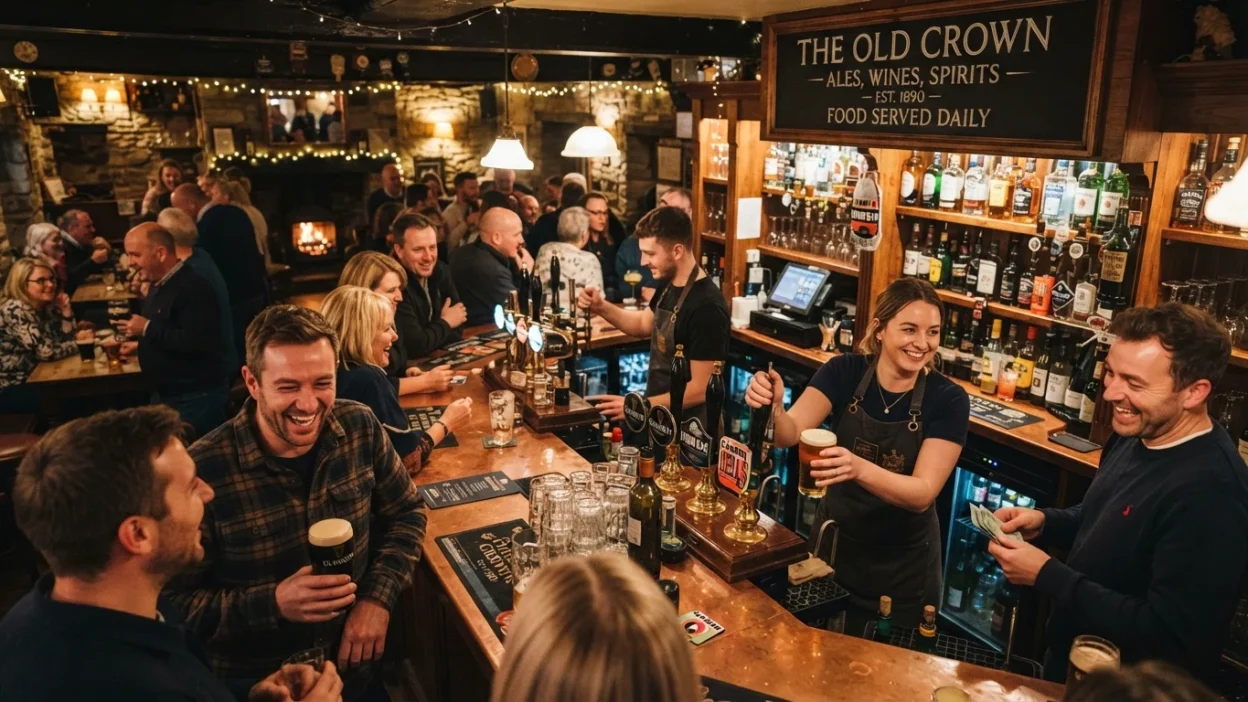
A pub is short for public house, a traditional term associated especially with Britain and Ireland. Historically, pubs developed as places where local residents could meet, drink, eat, talk, and socialize.
A traditional pub often has a more relaxed and familiar atmosphere than the word “bar” might suggest.
You might hear:
- “We’re going to the pub.”
- “There’s a lovely old pub near the village.”
- “He met his friends at the local pub.”
- “Let’s grab lunch at the pub.”
A pub may serve beer, cider, wine, spirits, soft drinks, coffee, and food.
The important point is that pub does not simply mean a place that sells alcohol. The word often carries a sense of community, tradition, familiarity, and social gathering.
Bar vs Pub: Main Differences
Although there are no universal rules, the following comparison can help.
| Feature | Bar | Pub |
|---|---|---|
| General meaning | Drinking establishment | Traditional public house |
| Strongest association | American and international English | British and Irish English |
| Atmosphere | Can range from quiet to energetic | Often relaxed and social |
| Food | Depends on the establishment | Food is commonly available |
| Community feeling | Varies widely | Traditionally strong |
| Entertainment | Music, sports, DJs, games, etc. | Conversation, sports, games, live music |
| Architecture | Highly varied | Often traditional or neighborhood-based |
| Typical word in the U.S. | Bar | Less common |
| Typical word in the U.K. | Bar is also used | Pub is extremely common |
These are tendencies rather than strict definitions.
Bar or Pub in American English
In American English, “bar” is generally the more natural and widely understood term.
For example, an American speaker might say:
“We’re going to a bar tonight.”
That could refer to almost any establishment primarily associated with drinking and socializing.
The word “pub” is also used in the United States, but it often suggests a particular style. An American “pub” might be designed to resemble a British or Irish pub, offering beer, hearty food, wooden interiors, sports, and a casual atmosphere.
You may therefore see names such as:
- Irish pub
- British pub
- English pub
- Neighborhood pub
- Gastropub
In the U.S., calling a place a “pub” can communicate something about its atmosphere or theme rather than simply its function.
Bar or Pub in British English
In British English, “pub” is an extremely common everyday word.
Someone in the United Kingdom may naturally say:
- “Let’s go to the pub.”
- “I’ll see you at the pub.”
- “The pub is just around the corner.”
British English also uses the word bar, but it can refer to the counter or a particular drinking area inside a pub as well as to a standalone establishment.
For example, someone might say:
“I’ll meet you at the bar.”
That does not necessarily mean they are going to a place called a bar. They could be referring to the serving counter inside a pub.
Bar or Pub in Irish English
The distinction becomes even more interesting in Ireland, where pub culture is deeply established.
An Irish pub traditionally serves as more than a place to purchase drinks. It can be a meeting place for friends, families, neighbors, travelers, and local communities.
Irish pubs may be associated with:
- Conversation
- Traditional music
- Sports
- Food
- Local history
- Community gatherings
- Storytelling
Of course, modern Irish bars and pubs vary greatly, so not every pub has all of these characteristics.
Examples of “Bar” in a Sentence
Here are several natural examples:
- “We found a quiet bar near the hotel.”
- “The bar was crowded on Friday night.”
- “He ordered a drink at the bar.”
- “They opened a new wine bar downtown.”
- “The sports bar was showing the championship game.”
Notice that “bar” can describe both the establishment and the physical counter where drinks are served.
Examples of “Pub” in a Sentence
Here are some examples:
- “We went to the pub after work.”
- “That pub serves excellent food.”
- “There’s an old pub beside the church.”
- “The local pub is popular with visitors.”
- “They met at the pub for a drink.”
These sentences have a distinctly British or Irish feel, although the word is understood in many other varieties of English.
Common Mistakes When Using Bar and Pub
One common mistake is assuming that bar and pub are completely interchangeable everywhere.
They overlap, but cultural expectations matter.
Mistake 1: Assuming Every Bar Is a Pub
A nightclub, cocktail lounge, or busy sports bar may be called a bar, but it might not naturally be described as a pub.
Mistake 2: Assuming “Pub” Means Only Beer
Beer is strongly associated with traditional pub culture, but pubs can serve many beverages and often offer substantial food menus.
Mistake 3: Thinking “Pub” Is Only British
The word is strongly associated with Britain and Ireland, but pubs exist around the world, including in the United States, Canada, Australia, and elsewhere.
Mistake 4: Treating the Difference as a Strict Rule
There is no universal legal or linguistic boundary separating every bar from every pub. Businesses choose their names based on culture, branding, history, and customer expectations.
Is a Pub a Type of Bar?
In everyday usage, it is reasonable to think of a pub as a type of drinking establishment related to a bar, especially when discussing the broad category.
However, the cultural meaning is different.
A pub traditionally emphasizes the idea of a public house and community meeting place, while “bar” is a much broader term.
Think of it this way:
Bar = broad category
Pub = traditional style and cultural identity
This is a useful shortcut, although real-world establishments can blur the boundary.
What Is a Gastropub?
A gastropub is a pub that places particular emphasis on quality food, often combining a casual pub atmosphere with a more ambitious restaurant-style menu.
Gastropubs may serve:
- Burgers
- Fish and chips
- Steaks
- Sandwiches
- Seasonal dishes
- Craft beer
- Wine
- Cocktails
The term has become especially common in discussions of modern food and drink culture.
Why Does the Difference Matter?
Knowing whether to use “bar” or “pub” can make your English sound more natural.
If you are speaking American English, bar is usually the safest general word.
If you are speaking British English and describing a traditional local drinking establishment, pub will often sound more natural.
The choice can also communicate atmosphere.
Compare:
“Let’s go to a bar.”
This might suggest nightlife, cocktails, music, or casual drinking.
“Let’s go to the pub.”
This can suggest a relaxed neighborhood setting, conversation, food, or traditional British or Irish culture.
The exact impression depends on context.
Bar vs Pub: Which Word Should You Use?
Use bar when:
- You want a general term.
- You are writing primarily for an American audience.
- The establishment specializes in cocktails or nightlife.
- You are describing a sports bar, wine bar, or similar venue.
- You are unsure which term fits.
Use pub when:
- You are discussing British or Irish culture.
- The establishment has a traditional neighborhood atmosphere.
- Food and conversation are central to the experience.
- The venue is explicitly called a pub.
- You want to emphasize traditional pub culture.
Frequently Asked Questions
Is a bar the same as a pub?
Not exactly. Both can serve alcoholic drinks and provide a place to socialize, but “pub” traditionally refers to a public house with strong British or Irish cultural associations.
Is “bar” American or British English?
“Bar” is used in both American and British English. However, American speakers commonly use “bar” as the general term for a drinking establishment.
Is “pub” British English?
Yes. “Pub” is especially strongly associated with British English and British culture, although the word is also widely understood and used elsewhere.
Can a pub be called a bar?
Yes. A pub can contain a bar, and people may refer to the serving area as “the bar.” Some establishments may even describe themselves using both terms.
Do pubs only serve alcohol?
No. Many pubs serve food, soft drinks, coffee, tea, and other beverages. Alcohol is traditionally important to pub culture, but it is not the only thing a pub can offer.
What is the difference between a pub and a restaurant?
A pub traditionally emphasizes drinks and socializing, while a restaurant primarily focuses on meals. Modern establishments can combine both, making the distinction less clear.
Is “pub” used in American English?
Yes, but it is less common as a general term than “bar.” In the United States, “pub” often suggests a British, Irish, traditional, or neighborhood-style establishment.
Which word should I use: bar or pub?
Use bar as the broad, general term. Use pub when you want to describe a traditional British or Irish-style establishment or when that is the venue’s established name.
Final Summary
The choice between bar or pub depends less on a strict definition and more on language, culture, atmosphere, and context. A bar is a broad term for a place where people can order drinks and socialize, while a pub traditionally refers to a public house with strong British and Irish roots. Pubs often have a neighborhood and community identity, while bars can range from cocktail lounges and sports venues to nightlife destinations.
For everyday English, remember the simplest distinction: bar is the more general word, especially in American English, while pub is particularly natural in British and Irish English. When in doubt, consider the country, atmosphere, and way the establishment describes itself.
Actionable Takeaway
If you’re writing for an American audience, choose bar for the general concept. If you’re describing British or Irish culture, a traditional neighborhood drinking establishment, or a venue specifically called a pub, choose pub. The best word is the one that matches both your audience and the atmosphere you want to communicate.

John Robert is a passionate author and faith-driven writer who contributes insightful and inspiring biblical content to Biblenast. With a strong commitment to sharing God’s Word, he focuses on creating meaningful messages that encourage spiritual growth, reflection, and daily guidance. His work aims to connect readers with the timeless teachings of the Bible.