
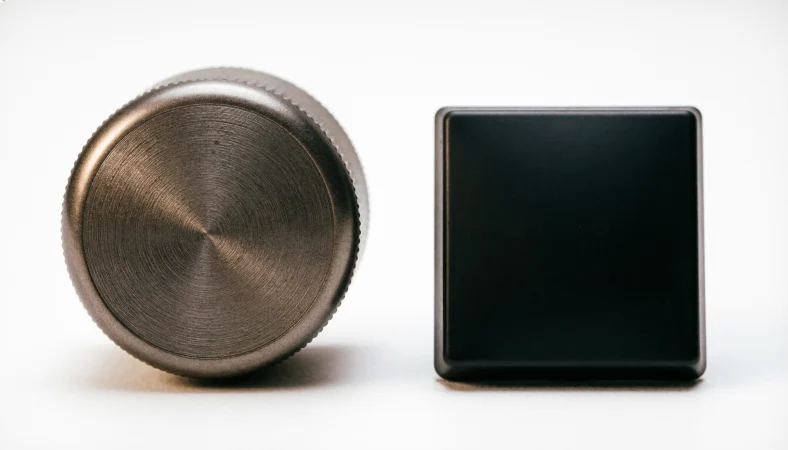
If you have ever wondered about knob vs nob, you are not alone. These two words look almost identical and are generally pronounced the same, but they have very different meanings and uses.
One is a common everyday word for a rounded control, handle, or prominent object, while the other is chiefly a British informal term with a very different sense.
Understanding the difference is especially useful when writing, editing, or communicating across American and British English.
In this guide, you will learn what knob vs nob means, how each word is used, where the words come from, and how to avoid common spelling mistakes.
Quick Answer: Knob vs Nob
Knob is the standard spelling for a rounded handle, control, or projecting object, such as a door knob or volume knob.
Nob is mainly a British informal word referring to a person of high social status or, in some contexts, an important or influential person. It can also have vulgar slang meanings depending on context.
If you mean a door handle, control, or rounded object, use knob.
What Does Knob Mean?
The word knob is a common English noun with several related meanings. Most often, it describes a rounded object that sticks out from a surface and is designed to be held, turned, pushed, or adjusted.
For example, a door may have a door knob, while a radio may have a volume knob.
The word can also describe a rounded lump or projection. In everyday language, you might hear someone refer to a small rounded part of an object as a knob.
Common meanings of knob
- A rounded handle used to open something
- A control that can be turned or adjusted
- A rounded projection or lump
- A rounded hill or elevated feature in some geographical contexts
- An informal or vulgar reference to a penis in British English
The intended meaning depends heavily on context.
What Does Nob Mean?
Nob is a less common word than knob, particularly in American English.
In British English, nob can be an informal noun for a person of high social standing, an important person, or someone regarded as socially superior. It is often associated with the older word nob, meaning an important or fashionable person.
For example:
The young nob arrived at the private club.
However, this use can sound old-fashioned, humorous, or deliberately British depending on the context.
There is another important point: nob can also be used as vulgar British slang. Because of this, writers should consider their audience and context before using it.
Knob vs Nob: Comparison Table
| Feature | Knob | Nob |
|---|---|---|
| Standard English word | Yes | Yes, but less common |
| Common in American English | Yes | Rare |
| Common in British English | Yes | Yes, in specific contexts |
| Door handle | Yes | No |
| Control on a device | Yes | No |
| Person of high status | No | Yes, informally |
| Can have vulgar slang meaning | Yes, in British English | Yes |
| Pronunciation | Usually /nɒb/ or /nɑːb/ | Usually the same |
The biggest practical distinction is simple: knob is normally the word you want when referring to an object or control.
Examples of Knob in a Sentence
Here are some natural examples:
- Please turn the knob to the left.
- The door knob came loose.
- She adjusted the volume knob on the speaker.
- The stove has four control knobs.
- He grabbed the knob and opened the cabinet.
- The drawer has a small wooden knob.
- Turn the temperature knob clockwise.
- The old door had a brass knob.
Notice that knob frequently refers to something physical that you can touch, turn, hold, or adjust.
Examples of Nob in a Sentence
Because nob is much less common, examples require more attention to context.
- The newspaper described him as a wealthy nob.
- Several political nobs attended the private event.
- The character is portrayed as a self-important nob.
- He acted like some kind of nob who was above everyone else.
In modern writing, this usage is often intentionally British, humorous, sarcastic, or informal.
Because nob may also carry vulgar slang associations, it is generally not the safest choice in formal writing unless you specifically need the word.
Is Knob or Nob Correct?
Both knob and nob are legitimate English words, but they are not interchangeable.
If you are describing a physical object such as a handle or control, knob is correct.
Correct:
Turn the knob to increase the temperature.
Incorrect for this meaning:
Turn the nob to increase the temperature.
If you are using the British informal term for an important or socially prominent person, nob can be correct.
The important thing is to match the spelling to the intended meaning.
Why Do People Confuse Knob and Nob?
The confusion is understandable because the two words differ by only one letter and usually sound identical.
English has many words in which a silent k appears at the beginning, including:
- knife
- knee
- know
- knock
- knot
- knight
- knob
In these words, the k is not pronounced.
Therefore, knob is pronounced essentially like nob.
This creates a classic spelling problem: you may know exactly what word you want to say but still hesitate when writing it.
Is the K Silent in Knob?
Yes. The k in knob is silent.
The word is pronounced approximately:
knob → “nob”
The same silent-k pattern occurs in words such as knee, knife, and know.
This is one reason learners sometimes write nob when they actually mean knob.
Remember that pronunciation does not always reveal spelling in English. The correct spelling has to be learned from usage and context.
American vs British English Differences
The word knob is used in both American and British English.
In American English, knob commonly refers to:
- door knobs
- cabinet knobs
- control knobs
- adjustment knobs
- rounded projections
British English uses these meanings as well.
The bigger difference concerns nob. British English has several informal uses of nob, including a reference to a socially important or wealthy person. This word is much less familiar in ordinary American English.
British English also uses knob in some vulgar slang expressions. American readers may therefore encounter knob with a meaning that has nothing to do with a physical handle.
For formal or international communication, context matters.
Common Mistakes With Knob and Nob
Mistake 1: Writing “nob” for a door handle
This is probably the most common spelling error.
Wrong:
I need to replace the front-door nob.
Right:
I need to replace the front-door knob.
Mistake 2: Assuming the pronunciation determines the spelling
Since the k is silent, it is easy to forget it.
A useful strategy is to associate knob with other kn- words that contain a silent k.
Mistake 3: Treating knob and nob as synonyms
They are not ordinary synonyms.
Although they sound alike, their standard meanings differ.
Mistake 4: Using “nob” without considering its tone
In British English, nob may sound informal, dated, sarcastic, or vulgar depending on the context.
It is therefore not generally a good replacement for person, official, leader, or gentleman in formal writing.
A Simple Memory Trick
If you are talking about something you can turn, hold, or adjust, think:
K = knob
For example:
- door knob
- volume knob
- oven knob
- cabinet knob
- control knob
If you are referring to the British informal word for an important or socially prominent person, nob may be the intended spelling.
Another useful trick is to remember:
The K is silent, but it still belongs in the word.
Knob, Handle, Dial, and Button: Are They the Same?
Not exactly.
A knob is usually a rounded object that can be held or turned.
A handle is generally designed to be gripped or pulled.
A dial often refers to a graduated control or display that can be rotated.
A button is usually pressed rather than turned.
For example, a washing machine might have:
- buttons for selecting functions
- a knob for choosing a cycle
- a handle for opening the door
- a display showing information
Choosing the right noun makes your description more precise.
Is “Knob” a British Word?
No. Knob is used in both British and American English.
However, some slang meanings of knob are particularly familiar in British English and may sound vulgar to many readers.
The ordinary meaning remains completely neutral:
Turn the knob.
The door knob is broken.
So there is no need to avoid the word simply because it can have slang meanings. Context determines how readers understand it.
Is “Nob” a British Word?
Nob is strongly associated with British English, especially in informal usage.
It can refer to someone considered socially important, wealthy, or influential. Depending on the context, it may be humorous, sarcastic, or derogatory.
Because the word is relatively uncommon in modern American English, an American reader may not immediately understand the intended meaning.
If clarity is the priority, alternatives such as important person, socialite, upper-class person, or influential person may be more appropriate, depending on what you mean.
How to Choose the Right Word
When you’re unsure about knob vs nob, ask yourself what you are describing.
Use “knob” if:
- You mean a door handle.
- You mean a rounded control.
- You mean something you turn.
- You mean a rounded projection.
- You are describing a physical object.
Use “nob” if:
- You specifically mean the British informal term for an important or socially prominent person.
- You are intentionally using a British informal or slang expression.
For most everyday spelling situations involving an object, knob is the answer.
Frequently Asked Questions About Knob vs Nob
Is “nob” the same as “knob”?
No. They are different words with different meanings. Knob commonly means a rounded handle or control, while nob is chiefly a British informal term for a socially prominent person and can have slang meanings.
Why is the K silent in knob?
English preserves the historical spelling of many words beginning with kn-, even though the /k/ sound disappeared from pronunciation over time. Thus, knob is pronounced without a spoken k.
Do Americans say “knob”?
Yes. Americans commonly use knob for door handles, controls, and similar objects.
Do British people use “nob”?
Yes. Nob occurs in British informal English, particularly when referring to someone socially important or high-status. It may also have other slang meanings.
Is “door nob” correct?
No. The standard spelling is door knob.
Is “volume nob” correct?
No. The correct spelling is volume knob.
Are knob and nob homophones?
In common pronunciation, yes. They are typically pronounced alike even though their spellings and meanings differ.
Is knob formal or informal?
The ordinary physical-object meaning of knob is completely standard and suitable for formal writing. Some slang meanings are informal or vulgar.
Final Summary
The difference between knob vs nob becomes much easier once you connect each spelling with its main meaning. Knob is the everyday word for a rounded handle, control, or projection. You use it when talking about a door knob, cabinet knob, oven knob, or volume knob. The k is silent, which explains why the word sounds like nob even though it is spelled differently.
Nob, meanwhile, is chiefly associated with British informal English and can describe a person of high social standing or importance. It can also carry slang or vulgar meanings, so context is important. For most practical writing, especially when describing a physical object, remember the simple rule: if you can turn it, hold it, or adjust it, it is probably a knob.
Actionable Takeaway
Before choosing between the two, identify the meaning first:
- Physical object or control → knob
- British informal term for a socially important person → nob
- Talking about a door → door knob
- Talking about a device control → control knob
- Unsure because they sound identical → remember the silent K in knob
Meta Description: Knob vs nob explained clearly: learn the meanings, spelling, pronunciation, British usage, examples, mistakes, and differences between these words.
Emersion vs Immersion: Meaning, Differences, Examples, and Correct Usage
Emersion vs immersion can be confusing because both words describe a change involving something being “in” or “out,” yet they refer to opposite stages of a process.
Immersion is the much more common word and generally means being placed into, covered by, or deeply involved in something. Emersion, by contrast, is a specialized term describing the act or process of emerging from immersion.
The distinction matters because these words appear in different contexts. You may encounter immersion in everyday conversations about water, language learning, education, technology, or experiences.
Emersion is less common and is primarily used in technical, scientific, astronomical, and specialized contexts. Understanding the difference will help you choose the right word confidently without relying on how similar they look.
Quick Answer: Emersion vs Immersion
Immersion means entering into or being completely surrounded by something, especially a liquid, environment, activity, or experience.
Emersion means emerging from something after having been immersed or hidden within it.
In simple terms:
Immersion = going in
Emersion = coming out
What Does Immersion Mean?
Immersion is the more familiar of the two words. It comes from the verb immerse, which means to put something into a liquid or to become deeply involved in an activity, environment, or experience.
The most literal meaning involves water or another liquid.
For example:
The immersion of the object in water lasted several minutes.
But modern English uses immersion much more broadly.
You can be immersed in:
- A language
- A culture
- A book
- A subject
- A virtual environment
- A learning experience
- A project
- A conversation
- A creative activity
This broader figurative meaning is extremely common.
What Does Emersion Mean?
Emersion is the process of emerging from something in which an object or person has been immersed.
It is much less common in ordinary conversation.
The word is particularly useful in technical contexts where something disappears into or becomes covered by another object or medium and later becomes visible again.
For example, astronomy can use emersion to describe the reappearance of a celestial body after it has been occulted or otherwise hidden.
A simple way to understand the word is:
Emersion = emergence from immersion.
Although emersion and emergence are related in meaning, they are not always interchangeable. Emersion specifically emphasizes coming out of an immersed or concealed state.
Emersion vs Immersion Comparison Table
| Feature | Immersion | Emersion |
|---|---|---|
| Basic idea | Going into or being surrounded by something | Coming out of an immersed state |
| Commonness | Very common | Relatively rare |
| Everyday usage | Yes | Usually no |
| Water-related use | Common | Possible in specialized contexts |
| Figurative use | Very common | Limited |
| Language learning | Very common | Not normally used |
| Education | Common | Rare |
| Science/astronomy | Used | Used in specialized contexts |
| Related verb | Immerse | Emerge/emerse |
| Simple memory | Going in | Coming out |
The most important distinction is direction: immersion moves into; emersion moves out.
Examples of Immersion
Here are some everyday examples:
- The scientist studied the immersion of the sample in water.
- Language immersion helped her become more fluent.
- The museum offers an immersive cultural experience.
- He became completely absorbed in the novel through deep immersion.
- The students participated in an immersion program.
- The device is designed for safe underwater immersion.
- She spent several months in cultural immersion while learning the language.
These examples show why immersion has become such a flexible word in modern English.
Examples of Emersion
Because emersion is specialized, natural examples tend to appear in scientific or technical contexts.
- The telescope recorded the emersion of the celestial object.
- Scientists observed the object’s emersion from the surrounding medium.
- The timing of the satellite’s emersion was carefully measured.
- The observation began before immersion and continued through emersion.
In ordinary writing, however, you may often find emergence, reappearance, or coming out more natural.
Immersion in Language Learning
One of the most common modern uses of immersion relates to language education.
Language immersion means learning or using a language by spending substantial time surrounded by it.
For example, a learner might live in a Spanish-speaking community, attend classes in Spanish, watch Spanish-language programs, and communicate with native speakers.
The idea is not simply memorizing vocabulary. The learner experiences the language repeatedly in meaningful situations.
Common phrases include:
- Language immersion
- Immersion learning
- Full immersion
- Cultural immersion
- Immersion program
- Immersion education
This is why you will encounter immersion far more frequently than emersion in educational content.
Immersion in Culture and Travel
Immersion is also widely used when discussing travel and cultural experiences.
A traveler might say:
I wanted a deeper cultural immersion rather than a typical tourist experience.
Here, immersion means becoming deeply involved in the local environment, customs, food, language, and everyday life.
This figurative meaning has become particularly popular because it describes more than simply visiting a place. It suggests active participation and sustained exposure.
Immersion in Technology and Entertainment
The technology and entertainment industries frequently use immersion to describe experiences that make users feel surrounded by or deeply engaged with digital content.
Examples include:
- Virtual reality immersion
- Immersive gaming
- Immersive theater
- Immersive audio
- Immersive digital experiences
For example:
The virtual reality headset creates a highly immersive environment.
Here, immersion does not mean physically entering water. Instead, it describes the psychological or sensory experience of feeling deeply surrounded by a digital environment.
The Scientific Meaning of Emersion
Emersion has a more specialized scientific role.
In astronomy, an emersion can describe the reappearance of an object after it has been hidden from view, particularly following an occultation.
For example, if one celestial object temporarily blocks another from observation, the moment when the hidden object becomes visible again can be described in terms of emersion.
This is a precise technical use and is one reason the word remains useful despite being uncommon in everyday English.
Emersion vs Emergence: Are They the Same?
No, although the words are related.
Emergence is a broad word meaning the process of becoming visible, known, developed, or apparent.
For example:
The emergence of new technology changed the industry.
Emersion has a narrower meaning connected with coming out of immersion or reappearing after being hidden.
Therefore, substituting emersion for emergence can make a sentence sound unnatural or technically incorrect.
If you simply mean “appearing” or “developing,” emergence is usually the better word.
Common Mistakes With Emersion and Immersion
Mistake 1: Using emersion when you mean immersion
A common error is choosing the less familiar word simply because it looks like a formal version of immersion.
Incorrect:
The course uses language emersion to teach students.
Correct:
The course uses language immersion to teach students.
Mistake 2: Assuming emersion means deeper immersion
The two words do not represent different levels of the same action.
They describe different directions.
Immersion means going into or being surrounded by something.
Emersion means emerging from it.
Mistake 3: Confusing emersion with emergence
These words overlap conceptually but have distinct meanings.
If you mean something is becoming visible, developing, or appearing, emergence is usually the appropriate term.
Mistake 4: Using emersion in everyday situations
Although emersion is a legitimate word, it is uncommon. In many ordinary situations, phrases such as emerging, reappearing, or coming out will sound more natural.
American vs British English Differences
There is no major American-versus-British spelling difference between emersion and immersion.
Both forms are recognized in American and British English.
The main difference is frequency and context rather than spelling.
Immersion is common in both varieties and appears regularly in education, technology, travel, science, and everyday descriptions.
Emersion is much rarer in both varieties and tends to occur in specialized scientific or technical writing.
Therefore, you should not choose emersion simply because you are writing British English. The correct choice depends on meaning.
A Simple Memory Trick
The prefixes provide a helpful clue.
Think of im- in immersion as moving into something.
Think of e- in emersion as moving out or emerging.
A practical memory formula is:
Immersion → in
Emersion → exit
This is not a complete explanation of the words’ historical development, but it is a useful way to remember their modern distinction.
Immersion and Emersion in Real-Life Writing
Consider these examples:
Water
The immersion of the equipment was necessary for the experiment.
Afterward:
The emersion of the equipment marked the end of the test.
Language
The students benefited from French immersion.
You would not normally say French emersion unless you were discussing something very different.
Astronomy
Researchers recorded the moment of emersion after the object disappeared from view.
This illustrates how context determines the correct word.
When Should You Use Immersion?
Choose immersion when you mean:
- Being placed into liquid
- Being surrounded by an environment
- Deep involvement in an activity
- Intensive language learning
- Cultural participation
- Deep engagement with media or technology
- Being absorbed in a subject or experience
It is the natural choice in the vast majority of everyday situations involving this pair.
When Should You Use Emersion?
Choose emersion when you specifically mean:
- Emerging from an immersed state
- Reappearing after being hidden
- A specialized scientific process
- A technical astronomical event involving reappearance
If your sentence is ordinary and you are unsure, emersion may not be the word you need. Check whether emergence, reappearance, or emerging communicates your idea more naturally.
Frequently Asked Questions About Emersion vs Immersion
Is emersion the opposite of immersion?
In a basic practical sense, yes. Immersion describes entering or being placed into something, while emersion describes emerging from an immersed or concealed state.
Is emersion a real word?
Yes. Emersion is a legitimate English word, although it is considerably less common than immersion and is often used in specialized contexts.
Is immersion the more common word?
Yes. Immersion is widely used in everyday English, especially in education, language learning, technology, travel, science, and descriptions of deep involvement.
Is emersion the same as emergence?
No. Emersion specifically relates to emerging from immersion or reappearing after being hidden. Emergence has a much broader meaning involving appearing, developing, or becoming known.
Is “language emersion” correct?
Usually no. The standard expression is language immersion, meaning intensive exposure to and use of a language.
Is there a British spelling of immersion?
No separate British spelling is normally used. Immersion is standard in both American and British English.
Where is emersion commonly used?
It is most likely to appear in specialized scientific, technical, and astronomical contexts rather than ordinary conversation.
How can I remember the difference?
Use immersion for going in and emersion for coming out. When talking about language learning, culture, or deep involvement, immersion is almost certainly the correct word.
Final Summary
The difference between emersion vs immersion is primarily about direction and context. Immersion means entering into, being covered by, or becoming deeply involved in something.
It is a common word used in everyday English, particularly for water, language learning, cultural experiences, education, technology, and entertainment.
Emersion is much less common and refers to emerging from an immersed or concealed state, especially in specialized scientific or astronomical contexts.
When choosing between these words, do not let their similar appearance confuse you.
Think about what is happening: immersion means going in, while emersion means coming out. If you are talking about learning a language, experiencing a culture, becoming absorbed in an activity, or placing something in water, choose immersion.
If you mean the specialized process of reappearing after being hidden or immersed, emersion may be appropriate.
Actionable Takeaway
Before using either word, ask:
- Going into something? → Immersion
- Deeply involved or surrounded? → Immersion
- Language or cultural learning? → Immersion
- Coming out of an immersed or hidden state? → Emersion
- Simply appearing or developing? → Emergence
When in doubt, remember the easiest distinction: immersion goes in; emersion comes out.

John Robert is a passionate author and faith-driven writer who contributes insightful and inspiring biblical content to Biblenast. With a strong commitment to sharing God’s Word, he focuses on creating meaningful messages that encourage spiritual growth, reflection, and daily guidance. His work aims to connect readers with the timeless teachings of the Bible.