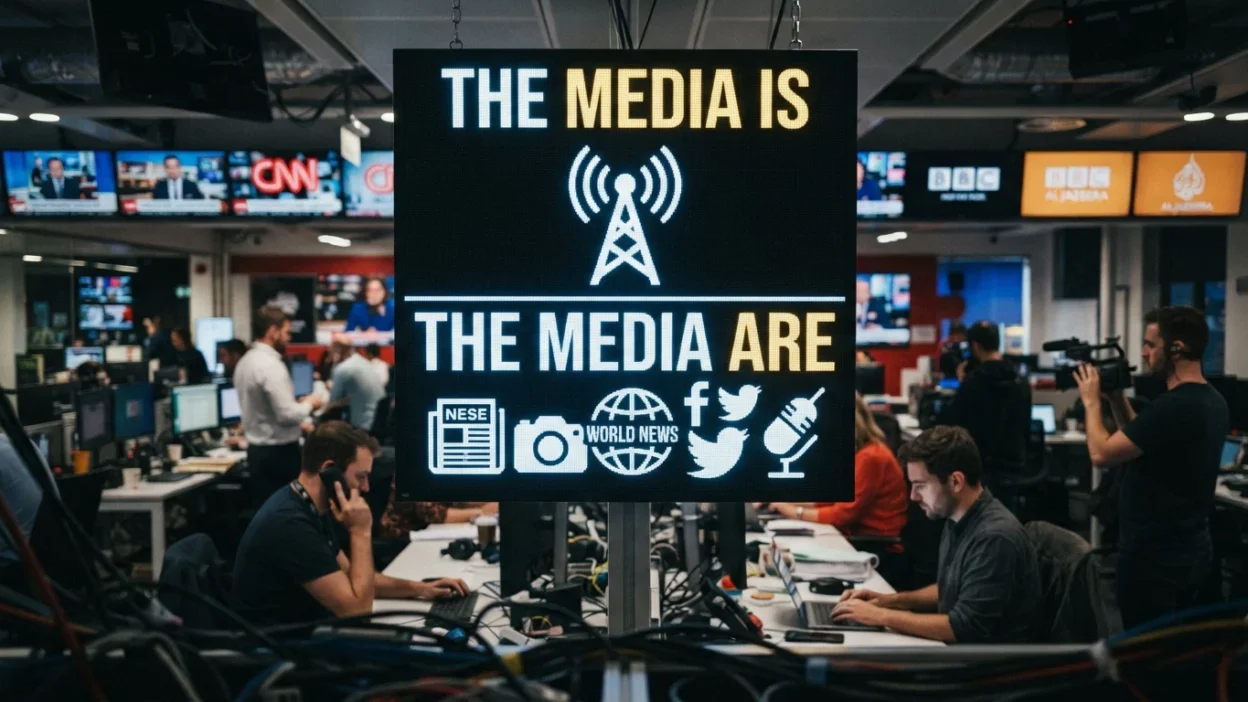
If you have ever hesitated between “the media is” and “the media are,” you are not alone.
The confusion comes from the fact that media is historically the plural form of medium, but modern English does not always treat it as a straightforward plural noun.
The correct choice depends largely on whether you are following American or British English usage and what you mean by the media.
In everyday English, “the media is” is common in American English when the media is treated as a collective institution or industry.
In British English, “the media are” is traditionally more common when the media refers to journalists, news organizations, or media outlets as a group.
However, both patterns can be found in different varieties and contexts. Understanding this distinction will help you write more naturally and avoid subject-verb agreement mistakes.
Quick Answer: The Media Is or The Media Are?
Both “the media is” and “the media are” can be correct.
- The media is — common in American English when the media is treated as a singular collective entity.
- The media are — traditionally common in British English when the media is treated as a plural group of organizations or people.
Examples:
“The media is covering the election extensively.”
“The media are covering the election extensively.”
Neither sentence is automatically wrong. The choice depends on the variety of English and whether media is being treated as singular or plural.
What Does “The Media” Mean?
The media is a collective term for channels, organizations, and professionals involved in communicating information to the public.
It can include:
- Newspapers
- Television networks
- Radio stations
- News websites
- Magazines
- Journalists
- News organizations
- Digital publications
- Social and broadcast media
For example:
“The media reported the story quickly.”
Here, the media refers broadly to news organizations and communication outlets.
The expression can also refer to the media industry as a whole:
“The media is changing rapidly because of digital technology.”
In this sentence, the focus is on the industry or system rather than individual media organizations.
Why Is “Media” Confusing?
The confusion comes partly from the history of the word.
Medium is traditionally the singular form, while media is traditionally its plural.
For example:
- One medium
- Several media
In older or more formal usage, you might see:
“Television is an important medium of communication.”
“Television and newspapers are important media of communication.”
However, media has also developed into a mass noun in modern English, particularly when referring to the news industry.
That is why you can encounter both:
“The media is powerful.”
and
“The media are powerful.”
The grammar depends on how the speaker conceptualizes the noun.
The Media Is: When to Use It
Use “the media is” when you treat the media as a singular collective entity, institution, or industry.
This construction is especially common in American English.
Examples
- “The media is changing because of social media.”
- “The media is an important part of modern democracy.”
- “The media is facing increasing competition from online platforms.”
- “The media is often criticized for its coverage of major events.”
- “The media is becoming increasingly digital.”
In each example, the media is viewed as one broad institution or industry.
This is similar to how English sometimes treats other collective concepts as singular:
“The entertainment industry is changing.”
The emphasis is on the industry as a whole.
The Media Are: When to Use It
Use “the media are” when the media is treated as a plural collection of organizations, journalists, or outlets.
This usage is particularly associated with British English and other varieties that retain the traditional plural treatment of media.
Examples
- “The media are reporting the story.”
- “The media are interested in the new policy.”
- “The media are asking difficult questions.”
- “The media are divided over the issue.”
- “The media are competing for readers and viewers.”
Here, the idea is that different journalists, publications, broadcasters, or organizations are acting as separate members of a group.
The Media Is vs The Media Are Comparison Table
| Expression | Typical usage | Meaning | Example |
|---|---|---|---|
| The media is | Common in American English | Media as one industry or institution | “The media is changing rapidly.” |
| The media are | Common in traditional British English | Media as multiple organizations or people | “The media are reporting the story.” |
| Media is | Usually depends on context | Media as a field, industry, or concept | “Digital media is transforming communication.” |
| Media are | Plural usage | Different forms or channels of media | “Print and broadcast media are changing.” |
The key is not simply memorizing one form. Instead, consider what media means in your sentence.
American English vs British English
The biggest difference between “the media is” and “the media are” appears between American and British English.
American English
American English commonly treats the media as a singular collective noun when referring to the news industry.
For example:
“The media is paying close attention to the story.”
This is natural in American English.
American English often uses singular verbs with collective nouns when the group is viewed as a unified entity.
British English
British English traditionally favors the plural:
“The media are paying close attention to the story.”
This treats the media as a collection of separate organizations or individuals.
British English also frequently uses plural verbs with other collective nouns, depending on whether the members of the group are being emphasized.
Is one version more correct?
No. The important point is consistency with your variety of English and your intended meaning.
If you are writing for an American audience, “the media is” will often sound natural.
If you are writing in traditional British English, “the media are” may be preferred.
The Media Is or The Media Are: Real-Life Examples
Consider these examples.
Example 1: Referring to the industry
“The media is changing because people consume more news online.”
Here, the media means the media industry as a whole.
Example 2: Referring to individual organizations
“The media are competing to publish the story first.”
Here, the focus is on separate news organizations competing with one another.
Example 3: American style
“The media is an influential part of modern society.”
This treats the media as one broad institution.
Example 4: British style
“The media are an influential part of modern society.”
This treats the media as a plural group.
Both are understandable, but the second follows the traditional British plural pattern more closely.
What About “Social Media Is” and “Social Media Are”?
This is another common source of confusion.
In modern English, social media is often treated as a singular mass noun when referring to the phenomenon or communication environment.
For example:
“Social media is changing how people communicate.”
This is extremely common.
However, social media can also be plural when referring to different platforms or forms of media:
“Social media platforms are competing for users.”
The word platforms makes the plural meaning clear.
You may also encounter:
“Social media are powerful communication tools.”
This is possible, especially in more traditional or formal usage, but social media is is now very common in everyday English.
Common Mistakes With “The Media”
1. Assuming “media” must always take a plural verb
Because media is historically plural, learners sometimes assume that “the media is” is always wrong.
That is not true in modern English.
“The media is changing.”
is standard and widely used, particularly in American English.
2. Assuming “the media is” is always correct
The opposite mistake is also possible.
If you are writing in traditional British English and treating media as a collection of organizations, “the media are” may be the more natural choice.
3. Mixing styles unnecessarily
If your document consistently follows British English, switching between:
“The media are reporting…”
and
“The media is changing…”
without a meaningful change in context may make your writing feel inconsistent.
Choose a style and maintain it where possible.
4. Confusing “media” with “medium”
Remember:
- medium = one means or channel of communication
- media = traditionally the plural of medium
For example:
“Television is a powerful medium.”
“Television and radio are important media.”
However, media has also developed independent mass-noun usage in modern English.
Is “The Media” Singular or Plural?
The most useful answer is: it can be either, depending on usage.
When the media refers to the industry as one collective institution, singular agreement is natural:
“The media is changing.”
When it refers to multiple news organizations, journalists, or outlets, plural agreement is natural in varieties that allow or prefer that treatment:
“The media are reporting different perspectives.”
This is why grammar guides sometimes appear to disagree. They may be describing different varieties or different meanings of the noun.
How to Choose the Correct Form
Use these three questions:
1. What variety of English are you using?
For American English, the media is is very common.
For British English, the media are is traditionally preferred when the group is treated as plural.
2. What does “the media” refer to?
If you mean the industry:
“The media is evolving.”
If you mean separate organizations or people:
“The media are competing with one another.”
3. What sounds natural for your audience?
For formal writing, consistency matters.
If you are preparing an academic paper, professional report, newspaper article, or website, follow the style conventions appropriate to your target audience.
Frequently Asked Questions
Is “the media is” grammatically correct?
Yes. “The media is” is grammatically correct when media is treated as a singular collective noun. This usage is especially common in American English.
Is “the media are” grammatically correct?
Yes. “The media are” is grammatically correct when media is treated as plural. It is especially common in traditional British English.
Which is more common in American English: “the media is” or “the media are”?
“The media is” is generally common in American English when referring to the media industry or news media as a collective entity.
Which is preferred in British English?
Traditional British English commonly uses “the media are”, particularly when referring to journalists, news organizations, or media outlets as a group.
Is media singular or plural?
Traditionally, media is the plural of medium. However, modern English also uses media as a mass noun, especially when referring to the media industry. As a result, singular agreement is common in some varieties.
Should I say “the media is” in formal writing?
You can, particularly if you are following American English. If your formal writing follows British English conventions, “the media are” may be more appropriate.
Is “social media is” correct?
Yes. “Social media is” is widely used when social media is treated as a general phenomenon or communication environment.
How can I remember the difference?
Think about the meaning. “The media is” often presents the media as one industry or institution, while “the media are” presents it as a collection of organizations or people.
Summary
The choice between “the media is” and “the media are” depends on both grammar and usage. Historically, media is the plural of medium, which explains why plural agreement such as “the media are” exists. Modern English, however, frequently treats media as a singular mass noun when referring to the news industry or media as a whole. This makes “the media is” perfectly natural in many contexts.
American English commonly uses “the media is,” while traditional British English more often uses “the media are.” Neither should automatically be labeled incorrect. The most important factors are your intended meaning, your variety of English, and consistency throughout your writing. When discussing individual media organizations or journalists, the plural idea may be especially useful; when discussing the industry as a whole, the singular form often feels natural.
Actionable Takeaway
Use this simple rule:
American English: “The media is” is often the natural choice.
Traditional British English: “The media are” is often preferred.
Meaning matters: industry as a whole → singular; separate members of the group → plural where appropriate.
If you are writing for an international audience, choose the form that matches your preferred style guide and use it consistently. Most importantly, do not assume that the historical plural form media makes “the media is” automatically incorrect.

Michael James is the administrator and a dedicated author at Biblenast, responsible for managing the platform and ensuring quality content. Alongside his administrative role, he writes insightful biblical articles that inspire faith, reflection, and spiritual growth. His work supports the mission of making God’s Word accessible and meaningful.